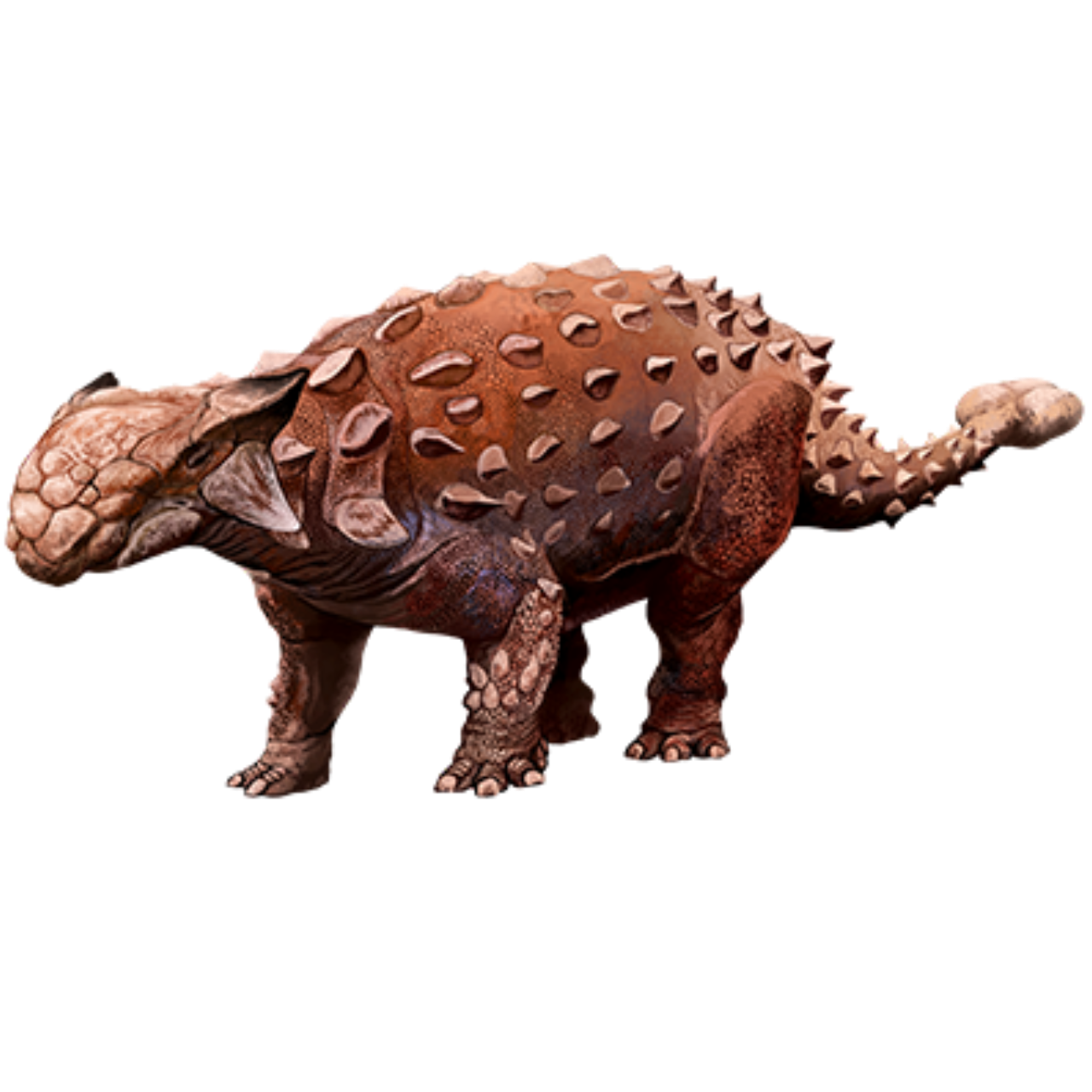
Ankylosaurus
A heavily armored dinosaur with a distinctive tail club.

DataBase Center for Life Science (DBCLS) · CC BY 4.0
Ankylosaurus is a genus of armored dinosaur from the very end of the Cretaceous Period, about 70–66 million years ago, in western North America. It is among the last of the non-avian dinosaurs and is often considered the archetypal member of its group, the Ankylosauria, despite having some unusual features.
- named_by
- Barnum Brown
- time_period
- Late Cretaceous (70–66 million years ago)
- location
- western North America
- length
- 6–8 m (20–26 ft)
- weight
- 4.8–8 t (5.3–8.8 short tons)
- known_for
- armored body with tail club
Lore & Background
His initial skeletal reconstruction resembled Stegosaurus and lacked a tail club, which was unknown at the time. Ankylosaurus was quadrupedal with a broad, robust body, a wide low skull with backward-pointing horns, and sideways-facing nostrils. Its body was covered in armor plates (osteoderms) and bony half-rings on the neck. The tail club is thought to have been used in defense against predators or intraspecific combat. The animal was likely slow-moving but capable of quick movements when necessary, and its broad muzzle suggests it was a non-selective browser. Only a handful of specimens have been excavated, and no complete skeleton has been found. The genus is monotypic, containing only A. magniventris. Its closest relatives appear to be Anodontosaurus and Euoplocephalus. Ankylosaurus lived alongside dinosaurs such as Tyrannosaurus, Triceratops, and Edmontosaurus, and appears to have been rare in its environment.
Reader's Guide
Ankylosaurus is significant as one of the best-known armored dinosaurs and the archetypal member of the Ankylosauria, despite being known from fewer remains than its closest relatives. Its fossils have been found in the Hell Creek, Lance, Scollard, Frenchman, and Ferris formations, but it appears to have been rare. Ankylosaurus is thought to have been a slow-moving, non-selective browser, and its sinuses may have been used for heat and water balance or vocalization. Though it lived alongside the nodosaurid Denversaurus, their ranges and ecological niches do not appear to have overlapped. The 2017 redescription by Arbour and Mallon highlighted that Ankylosaurus was bizarre compared to related ankylosaurs and not representative of the group, despite its familiarity.
Did You Know?
- Ankylosaurus is estimated to have been between 6 and 8 m long and weighed between 4.8 and 8 t.
- Its nostrils faced sideways rather than towards the front, unlike other ankylosaurs.
Physical Form and Defensive Armament
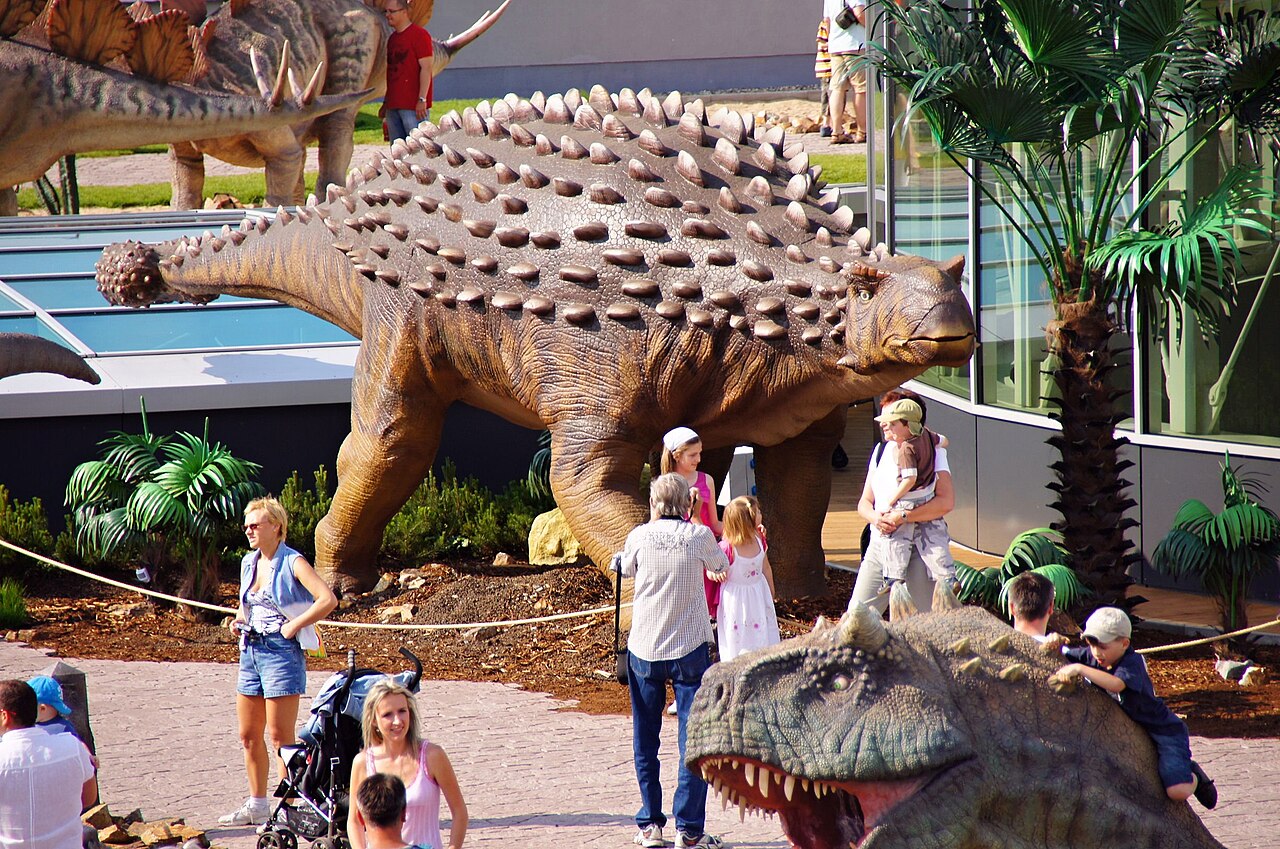
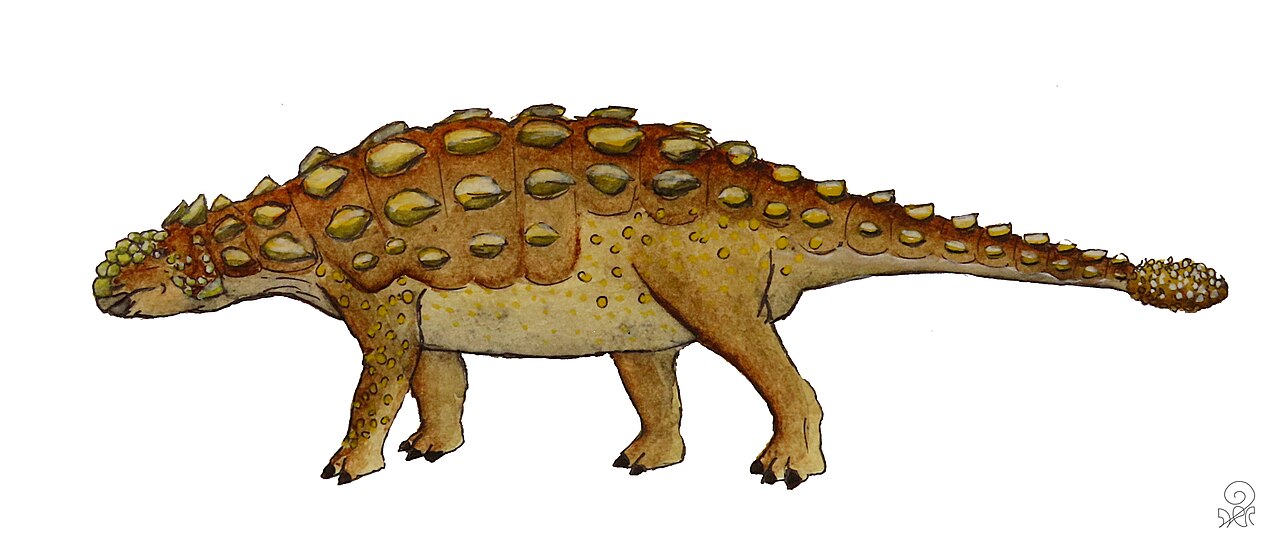
Ankylosaurus is estimated to have measured between six and eight meters in length and carried a mass of roughly 4.8 to 8 metric tonnes, making it possibly the largest known member of the ankylosaurid family. It moved on four legs atop a broad, heavily built frame. The skull was wide and low, bearing a pair of backward-pointing horns at the rear of the head and a second, lower pair angled backward and downward. A distinctive departure from other ankylosaurs is that its nostrils opened to the sides rather than forward. The front of the jaws was capped by a beak, with rows of small, leaf-shaped teeth set further back. The body was encased in osteoderms—bony armor plates—with half-ring structures shielding the neck, and a massive club anchored the tail's tip. Bones throughout the skull and skeleton were fused together, a trait that both reinforced structural strength and gave the genus its name.
Discovery and the Controversial 1908 Description
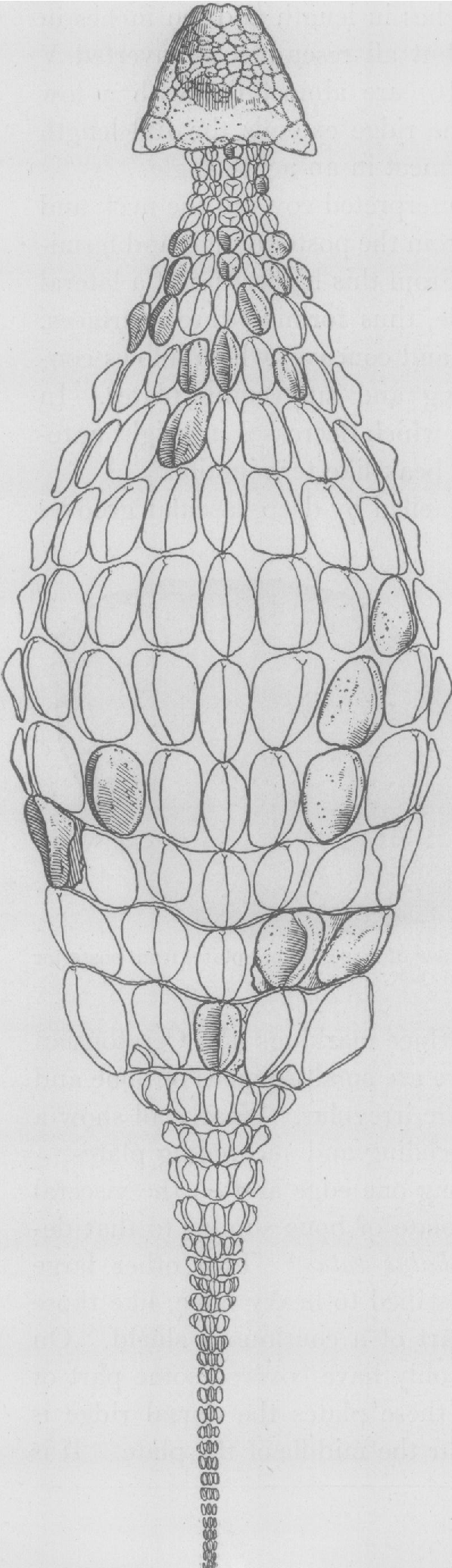
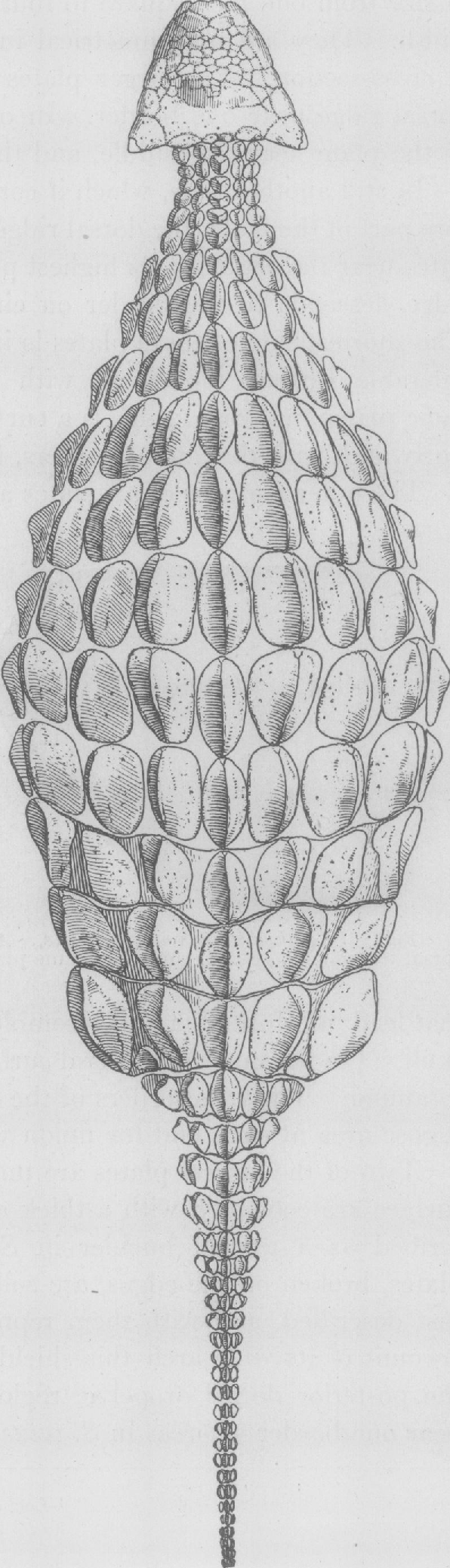
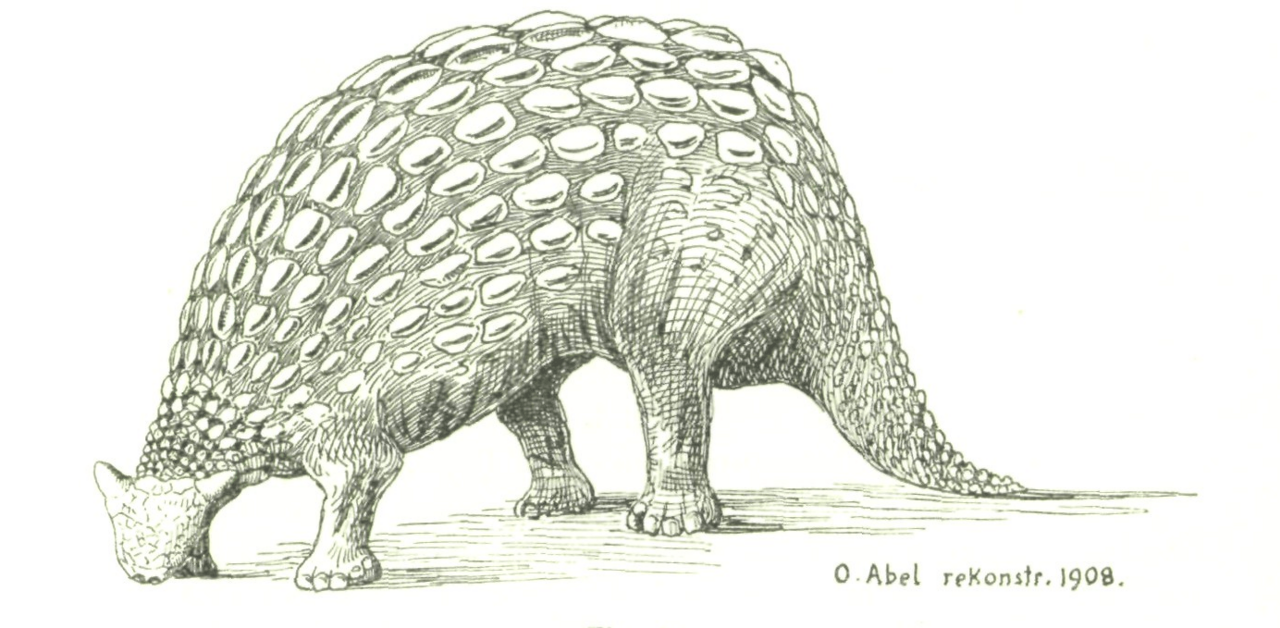
Collector Peter Kaisen had located the bones, which included the upper skull, a couple of teeth, shoulder girdle elements, various vertebrae, ribs, and over thirty armor plates. Brown depicted the creature with a strongly arched back, robust forelimbs, and a short drooping tail lacking any club, with armor plates arranged in neat parallel rows. Samuel Wendell Williston attacked the restoration as built on too little evidence and even argued the animal was simply a synonym of Stegopelta. That synonymy claim was never accepted.
Ecology, Diet, and Life in Late Cretaceous North America
Ankylosaurus roamed western North America during the final stretch of the Cretaceous, roughly 70 to 66 million years ago, placing it among the very last non-avian dinosaurs. Fossils have surfaced in the Hell Creek, Lance, Scollard, Frenchman, and Ferris formations, though the animal appears to have been uncommon in its surroundings. Its broad muzzle suggests it was a non-selective browser, likely sweeping through vegetation without much discrimination. Paleontologists infer it was a slow mover capable of short bursts of quick motion when the situation demanded. The sinuses and nasal chambers within its snout may have helped regulate body temperature and water balance, or perhaps played a part in producing sounds. The enormous tail club likely served as a weapon against predators such as Tyrannosaurus or in confrontations with rival individuals. Ankylosaurus shared its world with Triceratops, Edmontosaurus, and the nodosaurid Denversaurus, yet its ecological niche does not seem to have overlapped with that last species, hinting it may have favored upland terrain.
Taxonomy, Naming, and Archetypal Status
Ankylosaurus is a monotypic genus, containing only the species A. magniventris, and sits within the family Ankylosauridae. Its closest known relatives are Anodontosaurus and Euoplocephalus. Despite the fact that other ankylosaurid lineages are represented by far more extensive fossil collections, Ankylosaurus is frequently regarded as the archetypal member of the entire Ankylosauria group. This status persists even though it possesses certain unusual anatomical features, such as its laterally oriented nostrils, and even though only a handful of incomplete specimens have been excavated to date. Early confusion over which osteoderms belonged to Ankylosaurus versus Tyrannosaurus or Euoplocephalus complicated the picture for decades, but modern re-examination has clarified the picture considerably.
Common Misconceptions (Editorial)
- Some people think Ankylosaurus had forward-facing nostrils, but its nostrils actually faced sideways, unlike other ankylosaurs. - Many assume a complete skeleton has been found, but only a handful of specimens have been excavated, and no complete skeleton exists. - It is often believed that all ankylosaurs had tail clubs, but the tail club of Ankylosaurus was unknown when it was first reconstructed, and its earliest skeletal reconstruction actually resembled Stegosaurus.
Why It Matters (Editorial)
Ankylosaurus endures in the popular imagination as a living fortress, a testament to the evolutionary arms race between predator and prey at the end of the age of dinosaurs. Its rarity in the fossil record and unusual features, such as sideways-facing nostrils, remind us that even iconic species often remain mysterious, compelling scientists and the public alike to keep asking questions about life’s ancient past.
Gallery
Frequently Asked Questions
Who is Ankylosaurus?
Ankylosaurus is a heavily armored, herbivorous dinosaur that roamed western North America during the very end of the Cretaceous Period, roughly 70 to 66 million years ago. It is widely regarded as the textbook example of the ankylosaur family, even though it carried a few traits that set it apart from close relatives.
What are Ankylosaurus's signature physical features?
Its most iconic trait is the massive bony club at the end of its tail, which it could swing as a defensive weapon against predators. The rest of its body was encased in thick plates and bony knobs, making it one of the most heavily armored animals of its era.
How does Ankylosaurus's story end?
As one of the last non-avian dinosaurs to disappear, Ankylosaurus perished in the mass extinction event at the close of the Cretaceous, around 66 million years ago. No direct descendants survive today, though its lineage left a lasting mark on the fossil record.
Why is Ankylosaurus important to paleontology?
It serves as the archetypal representative of the Ankylosauria group, giving scientists a reference point for understanding armored dinosaurs more broadly. Its well-known tail club and body armor have also made it one of the most recognizable dinosaurs in popular culture.
How big was Ankylosaurus?
Adults measured roughly six to eight meters (about 20 to 26 feet) in length and weighed between 4.8 and 8 metric tons. That made it a bulky, low-slung quadruped, comparable in mass to a large modern elephant.
More in Dinosaurs 1-22
Spotted an error? Know more?
This is a living reference — every entry is fact-audited, and reader corrections feed straight into our audit queue. Suggest an edit · See this site's audit record