Pachycephalosaurus
Large herbivorous dinosaur with a thick domed skull.

Michael Brett-Surman · CC0
Pachycephalosaurus is a genus of pachycephalosaurid ornithischian dinosaur that lived during the Maastrichtian age of the Late Cretaceous period in what is now western North America. It is the largest-known pachycephalosaur, known for its extremely thick, slightly domed skull roof, which has been interpreted as a battering ram for defense or intra-species combat, though this hypothesis has been disputed. The type species, P. wyomingensis, is the only known definitive species, with the possibly synonymous taxa Stygimoloch and Dracorex being considered synonyms in recent studies.
- Time period
- Maastrichtian age, Late Cretaceous
- Location
- Western North America (Montana, South Dakota, Wyoming, Alberta)
- Length
- Estimated 4.5 m (15 ft)
- Skull thickness
- Up to 22 cm (8.7 in)
- Diet
- Herbivore
- Notable feature
- Extremely thick, domed skull roof
Lore & Background
The history and taxonomy of Pachycephalosaurus is storied and convoluted. Seventy-one years before its naming, Joseph Leidy named Tylosteus ornatus for a bone fragment later identified as a squamosal from a Pachycephalosaurus skull. Gilmore named Troodon wyomingensis based on a partial skull from the Lance Formation of Wyoming, which was later reassigned to Pachycephalosaurus. wyomingensis.
Reader's Guide
Pachycephalosaurus is significant as the largest-known pachycephalosaur and among the last non-avian dinosaurs before the Cretaceous–Paleogene extinction event. Its thick skull roof has been central to debates about pachycephalosaur behavior, with the battering-ram hypothesis now disputed. The genus has a complex taxonomic history involving confusion with Tylosteus, Stygimoloch, and Dracorex, resolved in part by the International Commission on Zoological Nomenclature in 1986, which conserved Pachycephalosaurus as a nomen conservandum. Remains have been found in the Lance, Hell Creek, Scollard, and Ferris Formations, indicating a wide distribution.
Did You Know?
- Pachycephalosaurus skull roofs could be up to 22 cm (8.7 in) thick.
The Iconic Skull and the Head-Butting Debate
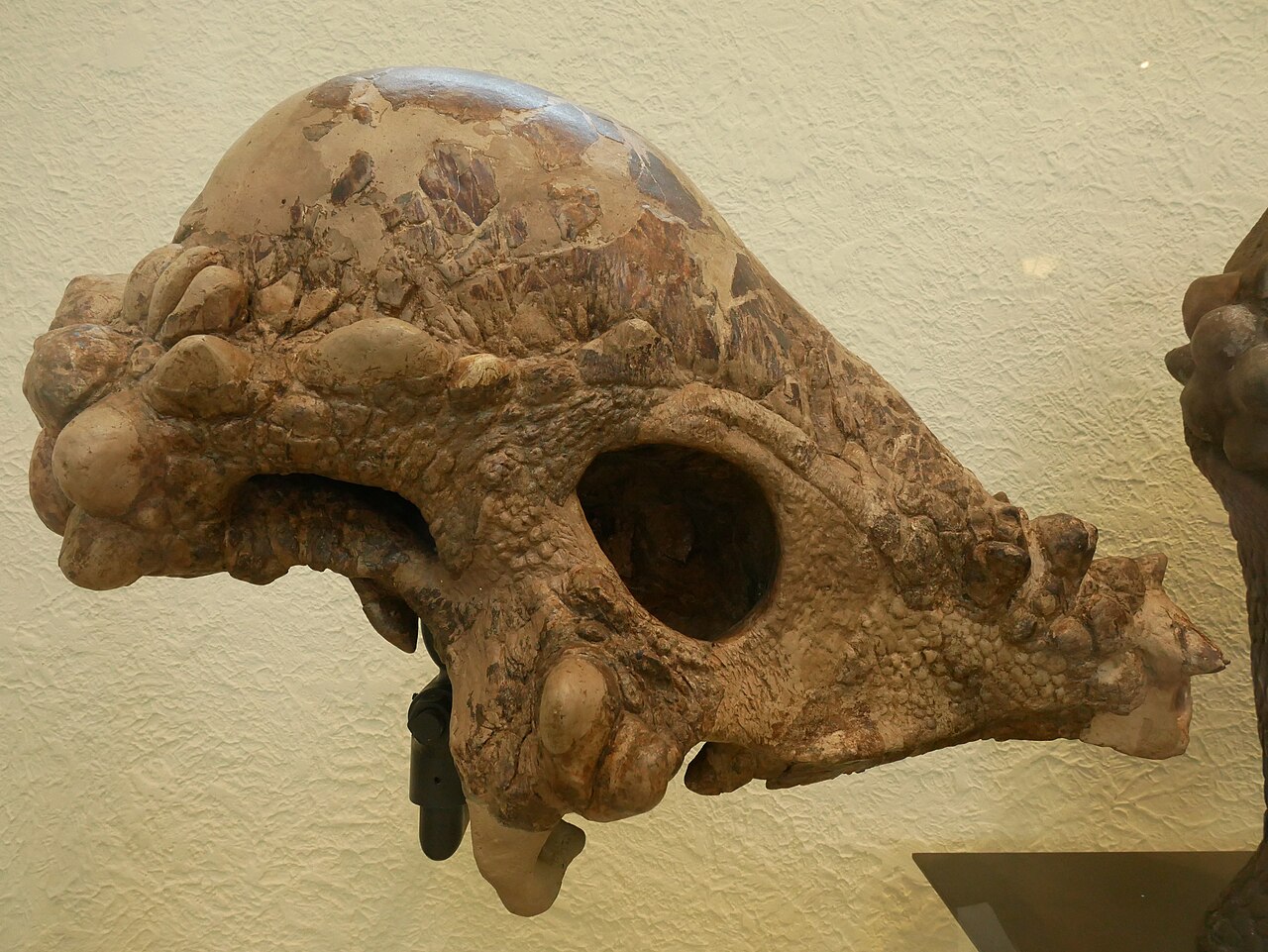
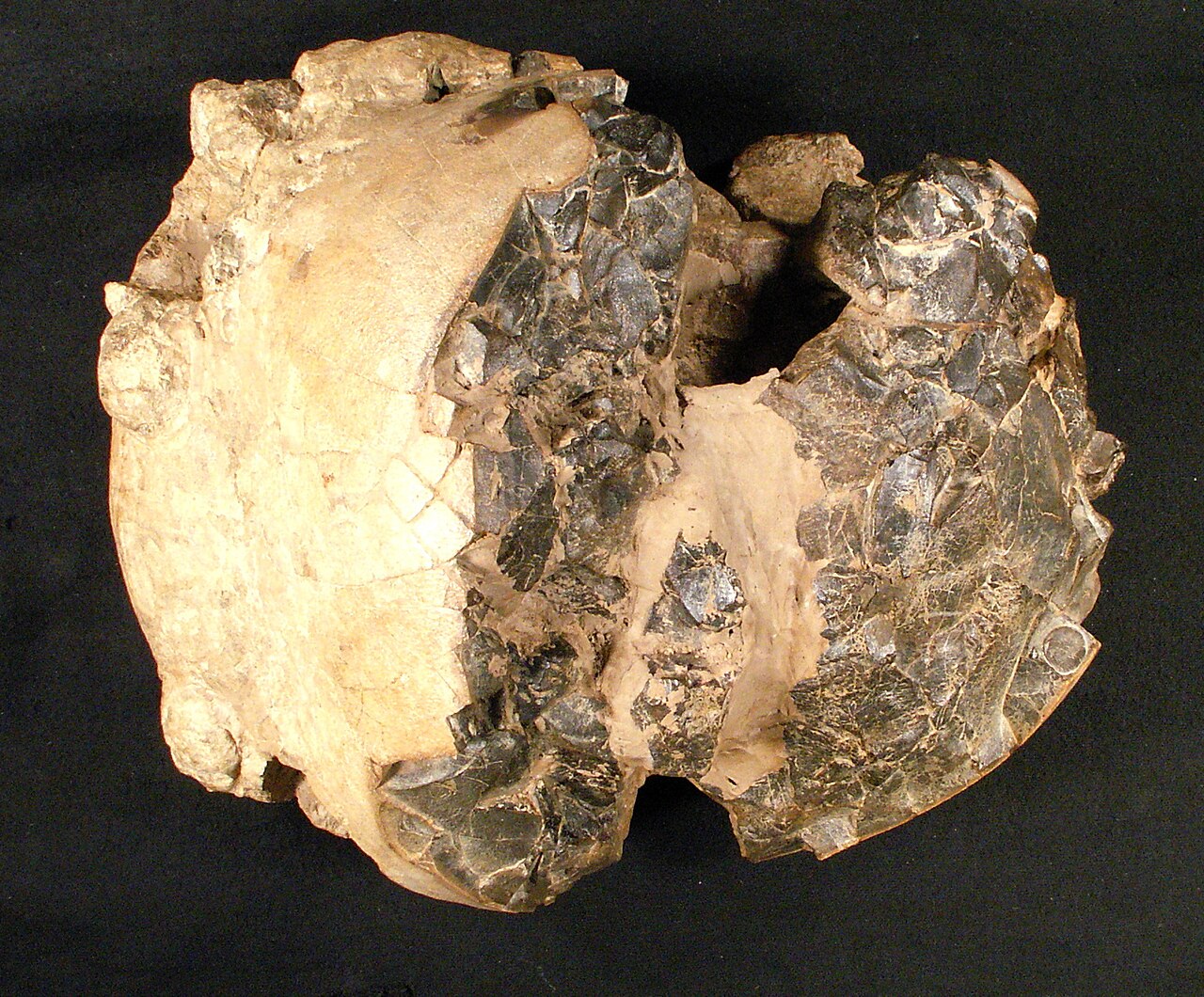
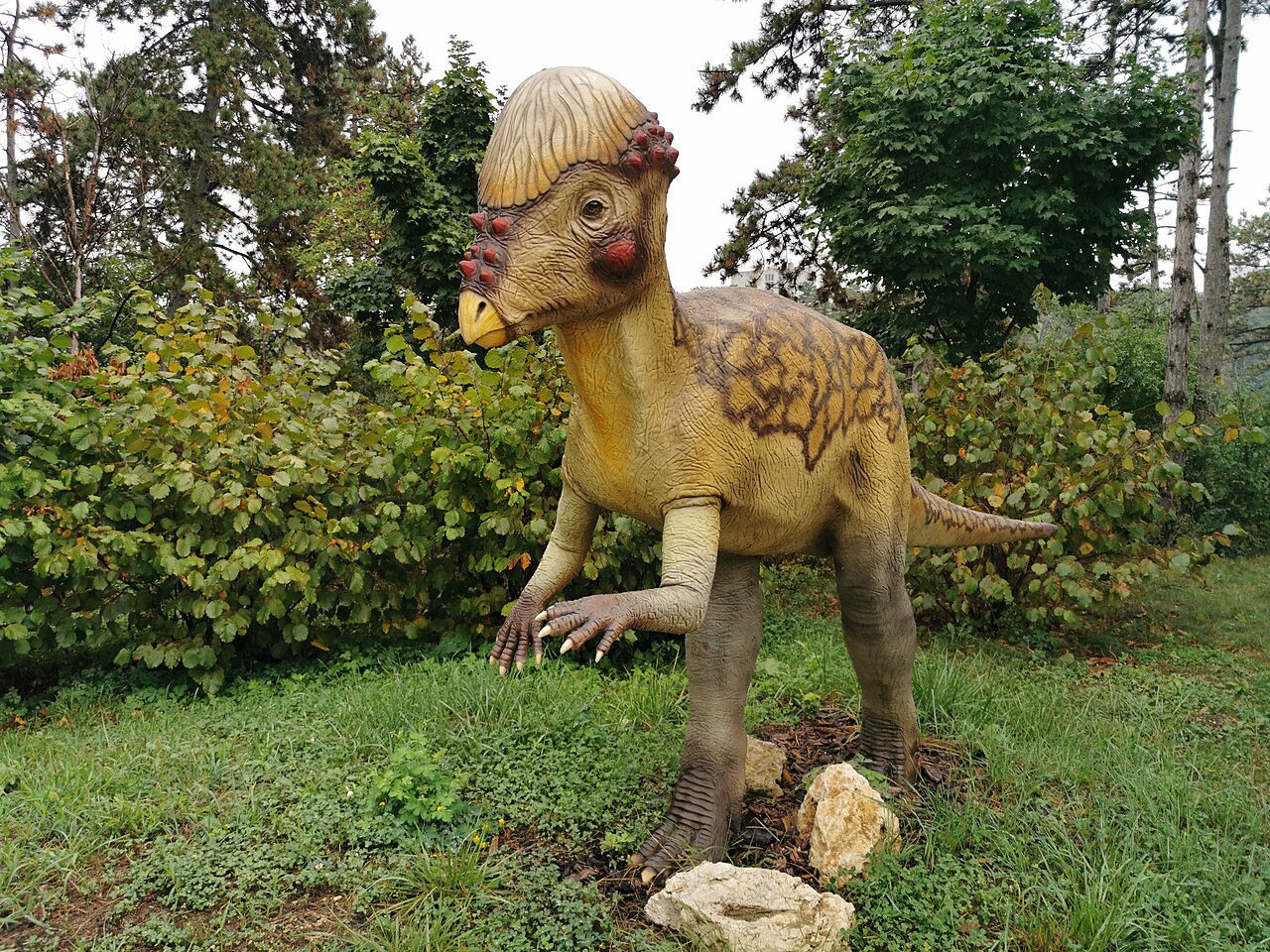
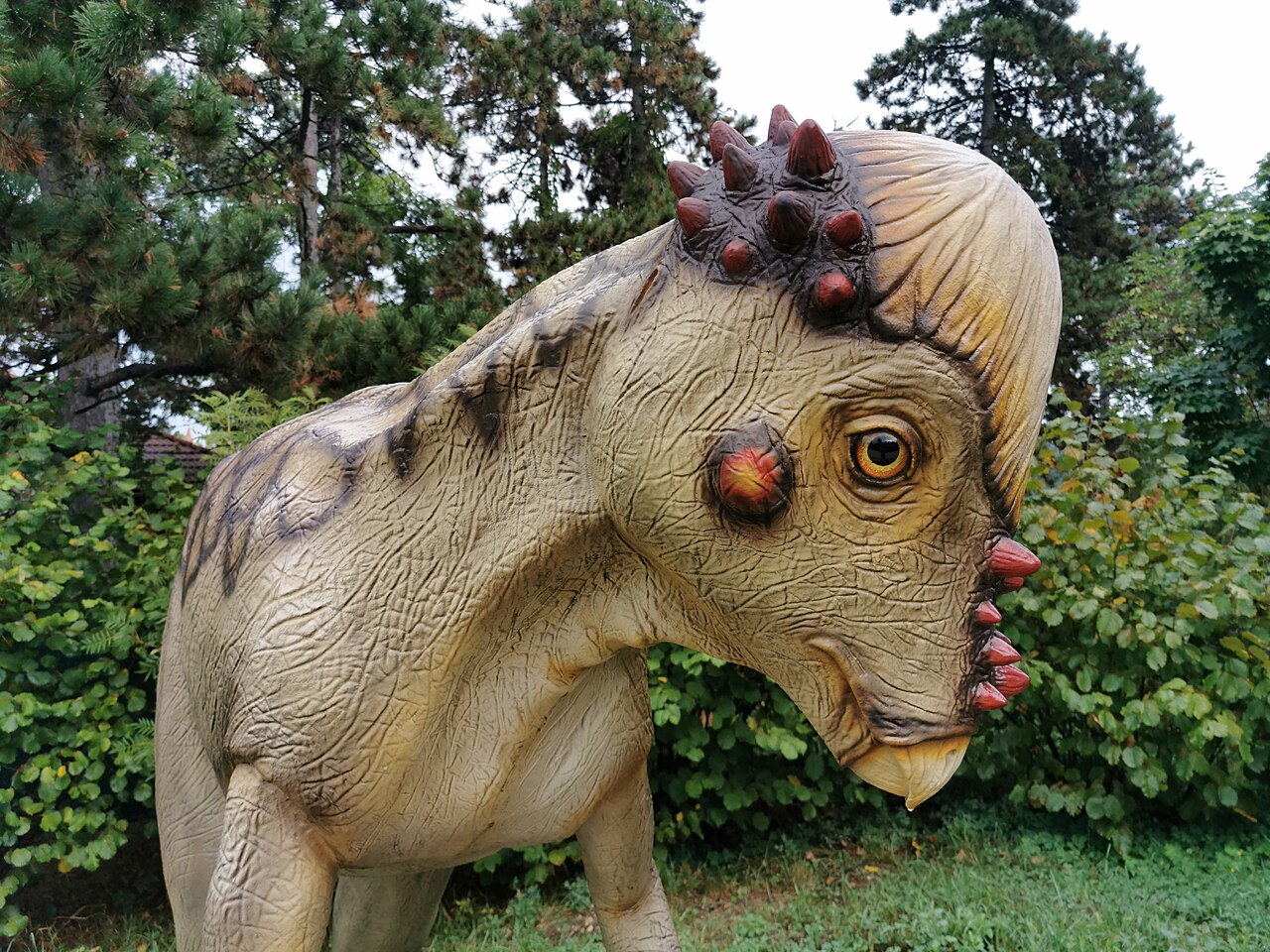
Pachycephalosaurus is best recognized for its extraordinarily thick, slightly domed skull roof, with specimens reaching up to 22 centimeters (8.7 inches) in thickness. The visual architecture of the bone suggests a function analogous to the head-butting behavior observed in modern bighorn sheep and muskoxen, where males charge and collide to establish dominance within their species. Under this interpretation, Pachycephalosaurus may have engaged in intra-species combat or used the thickened dome as a defensive mechanism. However, this long-standing hypothesis has faced increasing scrutiny in more recent years, with researchers questioning whether the skull's structure truly supported such a role. The debate remains a focal point in understanding how this largest-known pachycephalosaur interacted with its environment and conspecifics.
A Tangled Taxonomic History
The classification of Pachycephalosaurus has been anything but straightforward, involving multiple genera, dubious species, and decades of misidentification. The genus Tylosteus, named by Joseph Leidy in the 1860s for a single bone fragment initially interpreted as reptilian armor, was later recognized as a squamosal bone from a pachycephalosaur skull. Horner independently examined the original specimen and concluded it belonged to Pachycephalosaurus. Baird advocated for conserving the Pachycephalosaurus name, and in 1986 the International Commission on Zoological Nomenclature formally made Tylosteus a nomen rejectum while designating Pachycephalosaurus a nomen conservandum. More recently, the genera Stygimoloch and Dracorex have also been synonymized with Pachycephalosaurus in updated studies. The type species P. wyomingensis remains the only definitively confirmed species, though Stygimoloch may represent either a distinct genus or a second species, P. spinifer.
Discovery and the Bone Wars Era
The fossil record of Pachycephalosaurus was built piecemeal over more than a century of fieldwork. Marsh himself misinterpreted this bone as a spike-like dermal element of Triceratops, a hypothesis that even influenced Charles Knight's painting of the ceratopsid Agathaumas. Hatcher also collected a single tooth that Marsh assigned to a dubious ankylosaur, Palaeoscincus latus, though later researchers suggested it may have come from a pachycephalosaurid. These early finds, scattered across Montana, South Dakota, Wyoming, and Alberta, gradually assembled the picture of a dinosaur known initially from only a single skull and a few thick skull roofs before more complete specimens emerged in subsequent decades.
A Final Cretaceous Resident
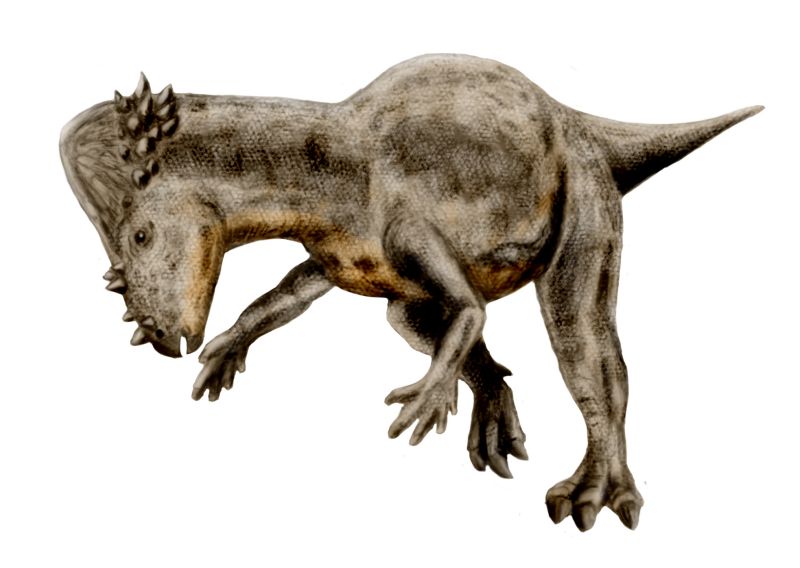
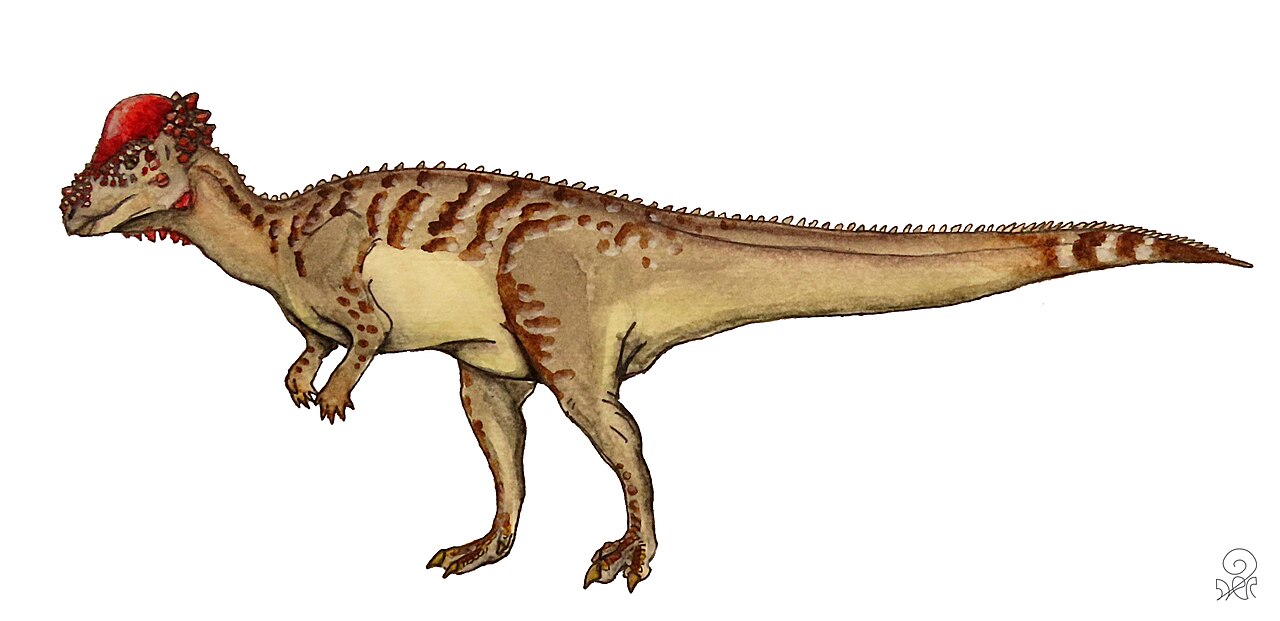
Pachycephalosaurus inhabited the Maastrichtian stage of the Late Cretaceous period, placing it among the very last non-avian dinosaurs to walk the Earth before the Cretaceous–Paleogene extinction event wiped out the majority of species. Its geographic range spanned what is now western North America, with remains excavated across Montana, South Dakota, Wyoming, and Alberta. As a bipedal herbivore, it possessed long, powerful hind legs for locomotion and comparatively small forelimbs equipped with five-fingered hands. Standing as the largest-known member of the pachycephalosaurid family, Pachycephalosaurus occupied a distinctive ecological niche in these Late Cretaceous ecosystems. The fact that it survived to the very end of the Cretaceous, only to be extinguished along with so many other species at the K-Pg boundary, makes it a poignant representative of a dinosaur lineage that persisted for millions of years before the mass extinction event reset the course of terrestrial life.
Common Misconceptions (Editorial)
- Some people think Pachycephalosaurus used its thick skull primarily for head-butting combat, but this hypothesis has been disputed and is not a confirmed fact. - It is commonly believed that Stygimoloch and Dracorex were separate dinosaur genera, but recent studies consider them possible synonyms of Pachycephalosaurus. - Many assume Pachycephalosaurus was carnivorous due to its aggressive appearance, but the facts confirm it was an herbivore.
Why It Matters (Editorial)
Pachycephalosaurus endures in the public imagination because its bizarre, dome-headed appearance challenges our assumptions about how dinosaurs lived and fought. The ongoing debate over its skull’s function reminds us that even well-known fossils can resist simple explanations, keeping paleontology a field of active discovery.
Gallery
Frequently Asked Questions
What is Pachycephalosaurus?
Pachycephalosaurus is a large, plant-eating dinosaur from the Late Cretaceous and the biggest known member of the pachycephalosaurid family. Its most striking feature is a massive, slightly domed skull roof that could reach up to 22 centimeters in thickness.
Where and when did Pachycephalosaurus live?
Fossils have been found in Montana, South Dakota, Wyoming, and Alberta, placing the species in western North America during the Maastrichtian stage of the Late Cretaceous. It coexisted with many of the last non-avian dinosaurs before the end-Cretaceous extinction.
Why was Pachycephalosaurus's skull so thick, and what was it used for?
One popular hypothesis suggests the dense bone cap functioned as a ramming weapon in head-on clashes with rivals of the same species or as a defensive shield against predators. That interpretation, however, remains disputed, and some researchers argue the structure may have served other biological purposes.
Which species of Pachycephalosaurus are actually recognized?
The only definitively confirmed species is P. wyomingensis, the original type species. Other names once treated as separate genera, such as Stygimoloch and Dracorex, are now widely regarded as synonyms of Pachycephalosaurus based on more recent comparative studies.
More in Dinosaurs 1-22
Spotted an error? Know more?
This is a living reference — every entry is fact-audited, and reader corrections feed straight into our audit queue. Suggest an edit · See this site's audit record