Stegosaurus
Armored herbivore with upright plates and spiked tail.

Skye M · CC BY-SA 4.0
Stegosaurus is a genus of extinct herbivorous four-legged armored dinosaurs from the Late Jurassic, characterized by distinctive kite-shaped upright plates along their backs and spikes on their tails. Of the species classified in the upper Morrison Formation of the western US, only three are universally recognized: S. stenops, S. ungulatus and S. sulcatus. Stegosaurus is one of the most recognizable kinds of dinosaurs due to its distinctive combination of broad, upright plates and tail tipped with spikes.
- diet
- Herbivorous
- length
- Up to about 7.5 metres (25 ft) for S. ungulatus
- mass
- Over 5 metric tons (5.5 short tons) for S. ungulatus
- notable_features
- Kite-shaped upright plates on back, spiked tail (thagomizer)
- type_species
- Stegosaurus stenops (replaced S. armatus as type species by ICZN)
Lore & Background
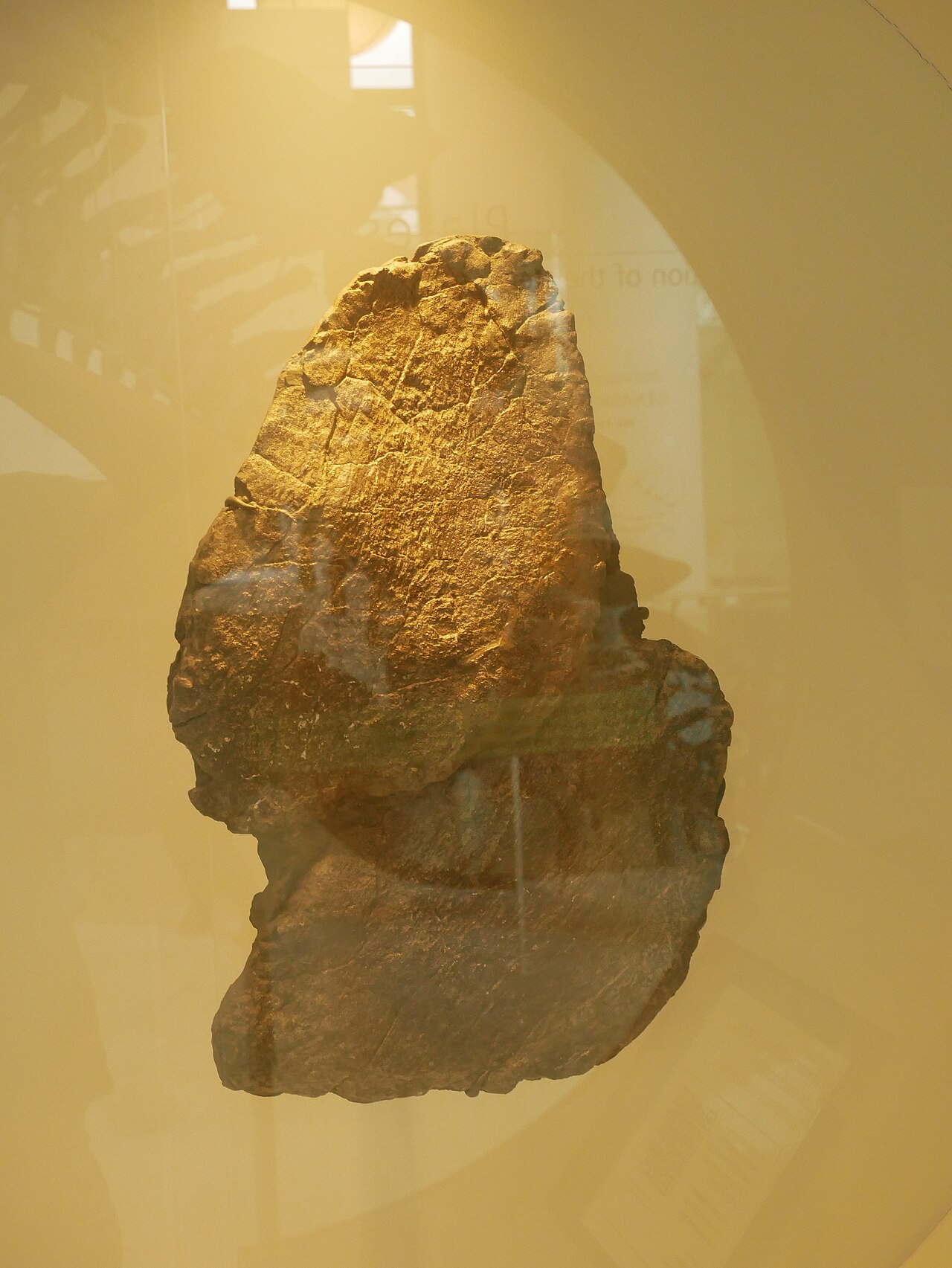
Stegosaurus remains were first identified during the 'Bone Wars' by Othniel Charles Marsh. The first known skeletons were fragmentary and the bones were scattered, and it would be many years before the true appearance of these animals, including their posture and plate arrangement, became well understood. Marsh described the genus as a dinosaur from the start, though later misinterpretations by others suggested an aquatic turtle-like animal. The name 'roof-lizard' came from his early belief that the plates lay flat over the animal's back like roof shingles. The first discovered fossils, consisting of several caudal vertebrae, a dermal plate, and additional postcranial elements, were collected from near Como Bluff, Wyoming, not Morrison, Colorado. The holotype of Stegosaurus armatus was actually collected from 'Lake Como' (near Como Bluff, Wyoming). Later, the type specimen of S. armatus was found to be dubious, and the International Commission on Zoological Nomenclature replaced it with the more well-known species Stegosaurus stenops.
Reader's Guide
Stegosaurus is one of the better-known dinosaurs and has been featured in film, on postal stamps, and in many other types of media. Despite its popularity in books and film, mounted skeletons of Stegosaurus did not become a staple of major natural history museums until the mid-20th century, and many museums have had to assemble composite displays from several different specimens due to a lack of complete skeletons. The function of its array of plates and spikes has been the subject of much speculation; today it is generally agreed that the spiked tails were most likely used for defense against predators, while the plates may have been used primarily for display and secondarily for thermoregulatory functions. Stegosaurus had a relatively low brain-to-body mass ratio, a short neck, and a small head, meaning it most likely ate low-lying bushes and shrubs. It lived alongside dinosaurs such as Apatosaurus, Diplodocus, Camarasaurus and Allosaurus, the latter of which may have preyed on it.
Did You Know?
- The name Stegosaurus means 'roof-lizard' because Marsh initially thought its plates lay flat over the back like roof tiles.
- One species, Stegosaurus ungulatus, is among the largest known stegosaurians, measuring about 7.5 metres long and weighing over 5 metric tons.
The Bone Wars and a Misidentified Giant
Stegosaurus entered the fossil record during the heated rivalry of the Bone Wars, a period when competing paleontologists raced to name and claim new species. Beckwith from a quarry north of Morrison, Colorado. Marsh, working with these fragmentary remains, initially mistook the animal for something resembling an aquatic turtle. The competitive atmosphere meant fossils were often misassigned; Marsh, for instance, lumped a Diplodocus jaw and an Allosaurus shin bone into his Stegosaurus material. It would take decades of careful preparation before the true posture and plate arrangement of these animals became clear.
A Body Built for Browsing, Not Brute Force
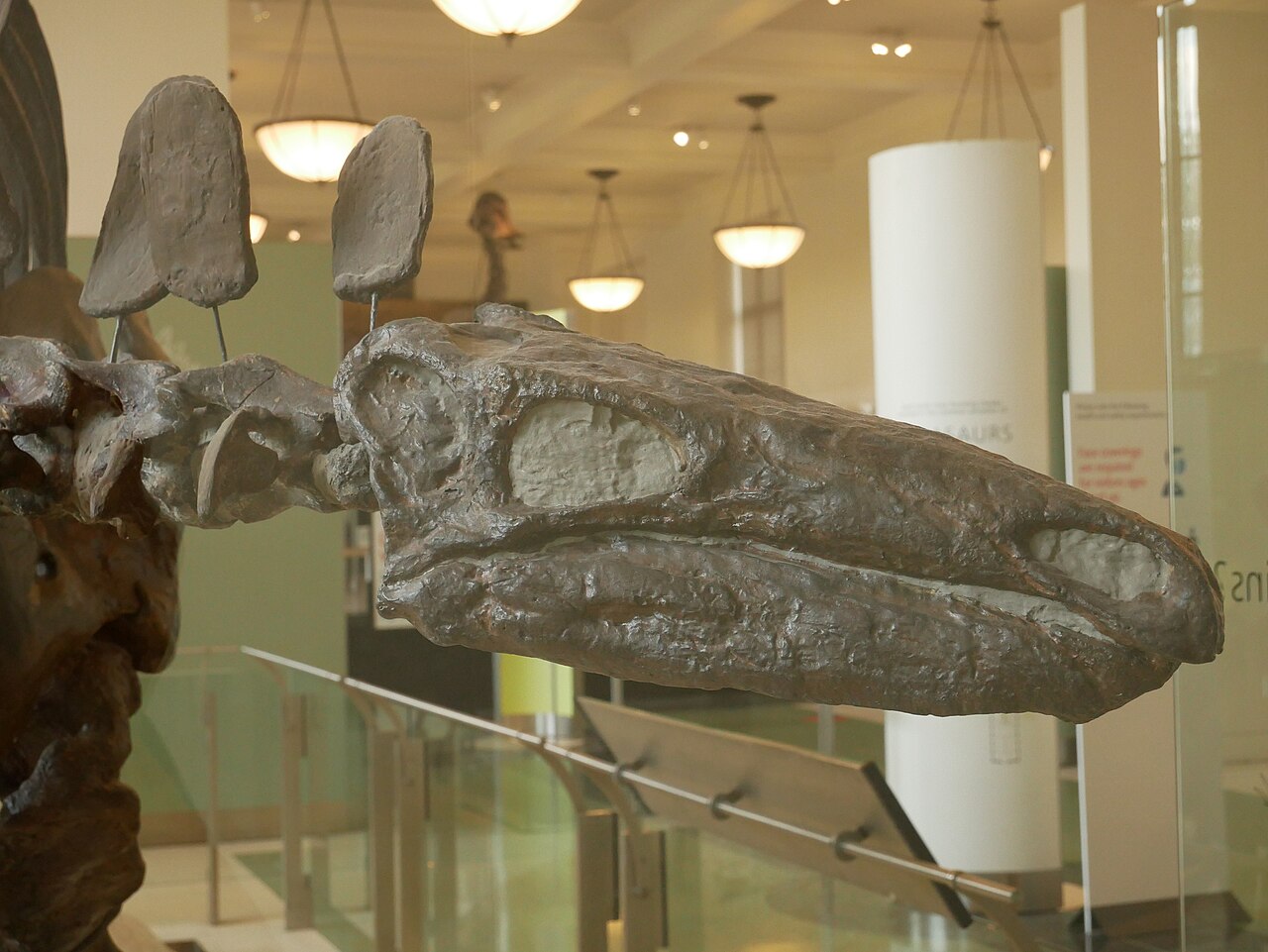
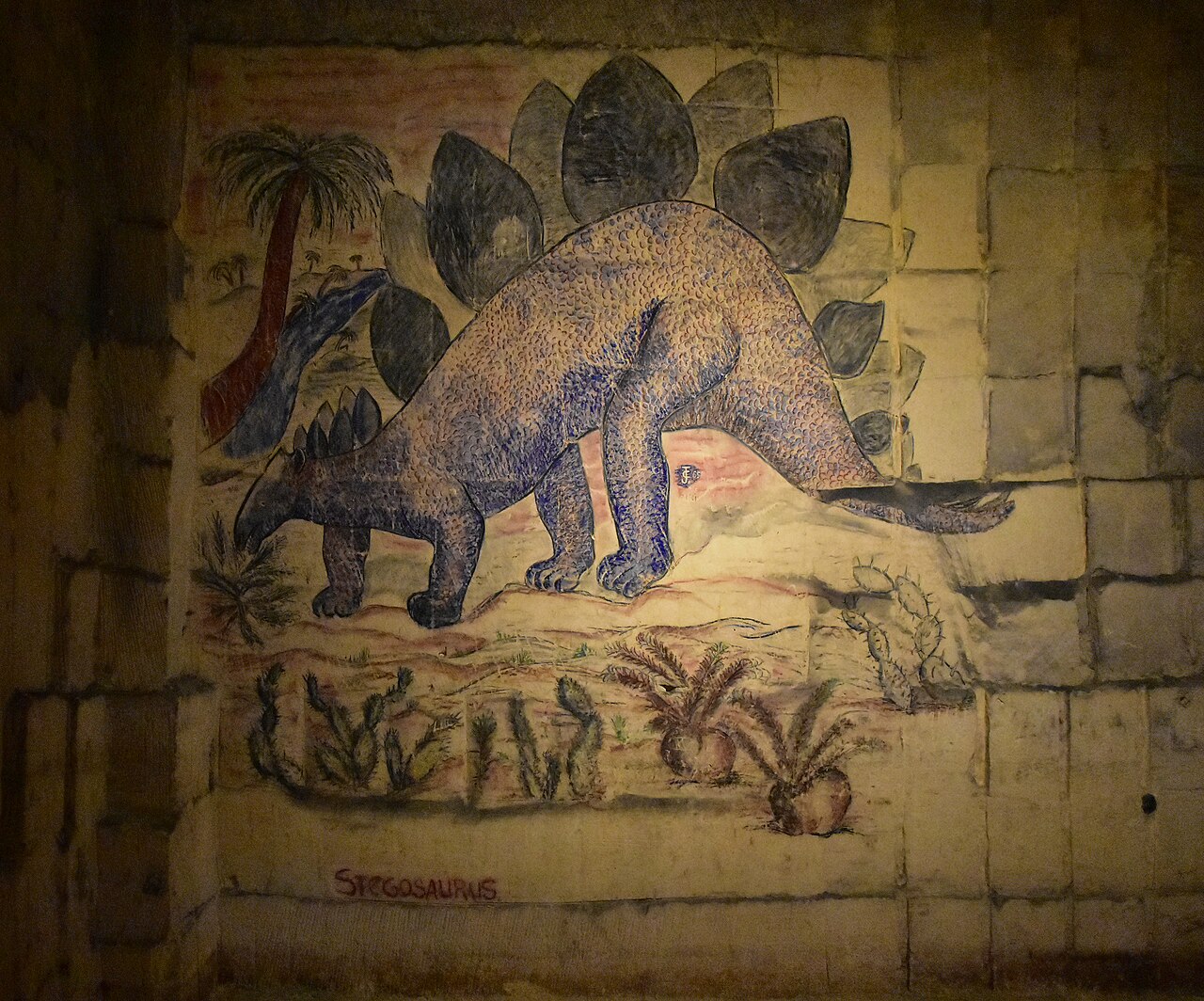
Stegosaurus was a massive, heavily built quadruped whose silhouette was dominated by broad, upright plates running along its rounded back and a pair of formidable spikes guarding the tip of its tail. Despite its imposing size—some specimens of S. ungulatus reached roughly 7.5 metres in length and exceeded five metric tons in weight—the animal carried a surprisingly small head on a short neck, a configuration that strongly suggests it fed on low-lying shrubs and bushes rather than reaching high into the canopy. Its brain-to-body mass ratio was notably low, placing it among the less cognitively complex of its contemporaries. The forelimbs were short while the hind limbs were longer, and the tail was held high in the air. In its Late Jurassic habitat, Stegosaurus shared the landscape with long-necked sauropods such as Apatosaurus, Diplodocus, and Camarasaurus, as well as the predatory Allosaurus, which may have targeted it. Today, scientists broadly agree that the tail spikes served as a defensive weapon against such predators, while the elaborate plates likely functioned first as a visual display and secondarily as a means of regulating body temperature.
A Tangled Taxonomic History
Sorting out exactly which fossils belong to which Stegosaurus species has proven remarkably difficult. Although the genus was named in the 1870s, only three species—S. stenops, S. ungulatus, and S. sulcatus—are universally accepted by the paleontological community today. Complicating matters, the original type species, S. armatus, is now considered dubious because the holotype material is so fragmentary that it cannot be confidently diagnosed. In response, the International Commission on Zoological Nomenclature stepped in to designate S. stenops as the replacement type species, a significant administrative correction for such a well-known genus. Other names Marsh introduced have not survived: S. duplex is now regarded as a synonym of S. ungulatus, and S. 'affinis,' based on a single lost hip bone, was declared a nomen nudum. The question of whether Cope's Hypsirhophus discurus represents a separate genus or merely another Stegosaurus remains debated, with some researchers pointing to vertebral differences.
From Fragment to Icon
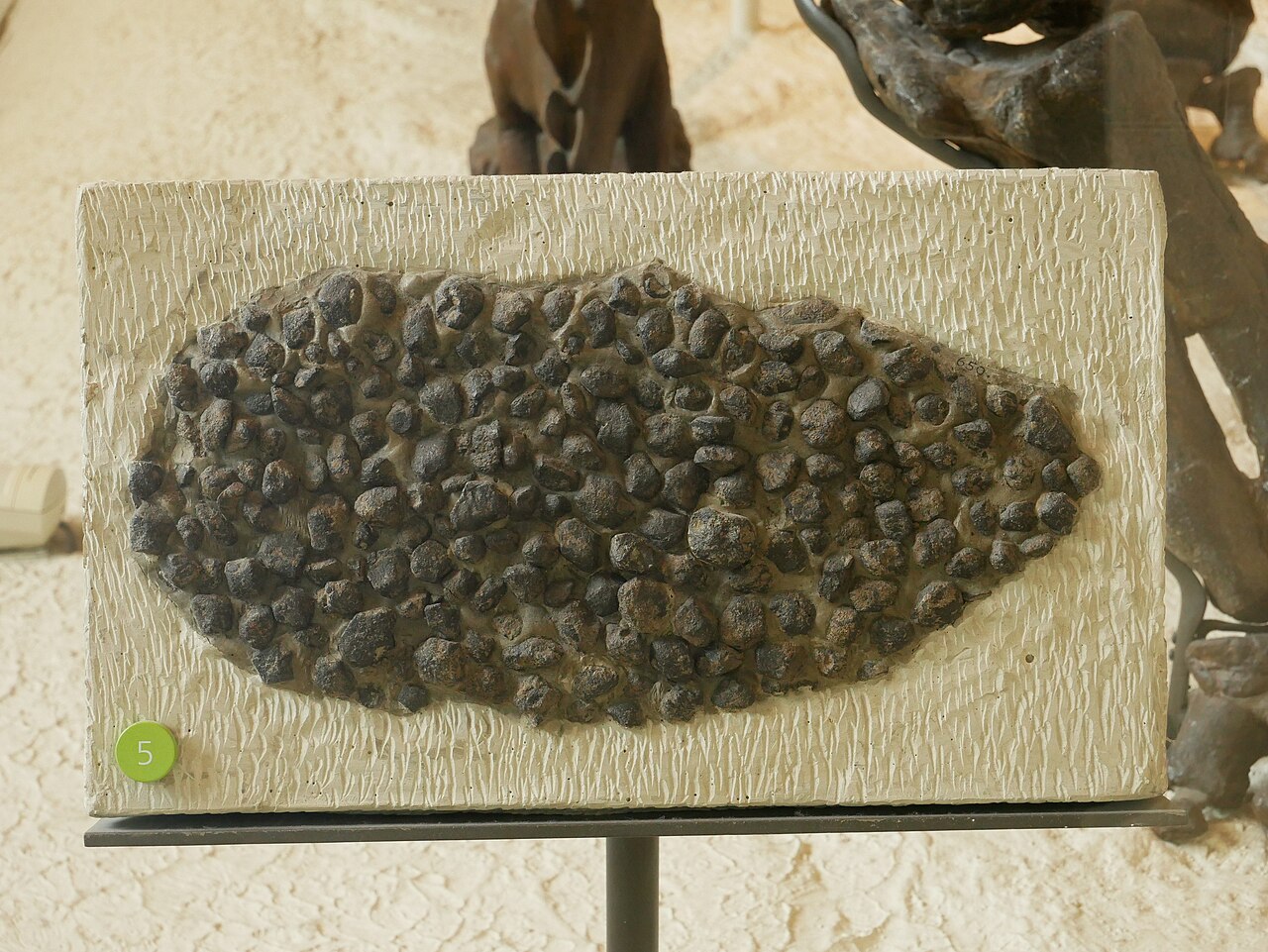
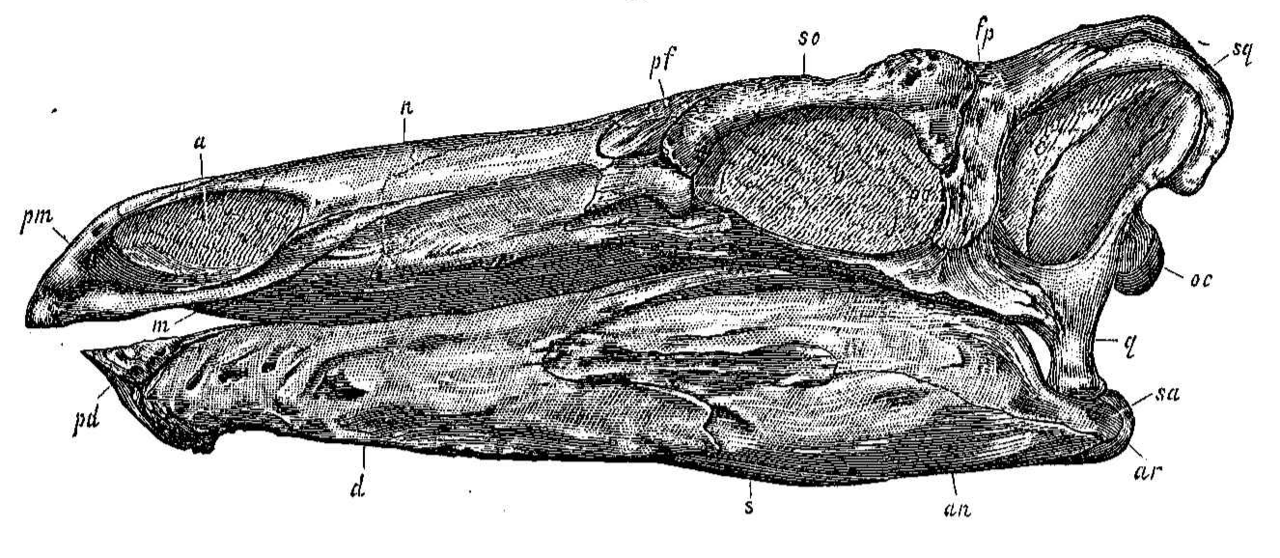
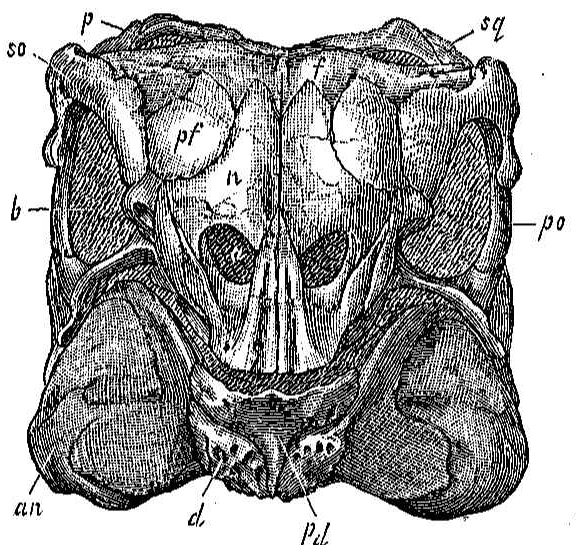
Despite being one of the most instantly recognizable dinosaurs in popular culture—appearing in films, on postal stamps, and in countless other media—Stegosaurus took an unusually long time to find its place in museum halls. The earliest known skeletons were so fragmentary and their bones so scattered that the animal's true posture and the arrangement of its plates remained poorly understood for decades. It was not until the mid-twentieth century that mounted Stegosaurus skeletons became a regular feature of major natural history museums. Because complete specimens are rare, many institutions have had no choice but to construct composite mounts by combining bones from multiple individuals. A turning point in understanding came in 1885, when a nearly complete, articulated subadult skeleton was unearthed, preserving previously unknown elements including a full skull, throat ossicles, and plates still in their natural positions. Marshall P. Felch oversaw the collection of this remarkable find. Even so, the sheer number of specimens—over eighty individuals—has not eliminated the need for careful reconstruction, and the genus continues to reward researchers with new anatomical details long after its initial description.
Common Misconceptions (Editorial)
1. Despite its name meaning "roof-lizard," Stegosaurus did not have its plates lying flat over its back like roof shingles; that was an early misinterpretation by Othniel Charles Marsh. 2. The first Stegosaurus fossils were collected near Como Bluff, Wyoming, not from Morrison, Colorado. 3. The original type species, Stegosaurus armatus, is now considered dubious and has been replaced by Stegosaurus stenops as the type species by the International Commission on Zoological Nomenclature.
Why It Matters (Editorial)
Stegosaurus endures as a cultural icon because its bizarre anatomy—those upright kite-shaped plates and a spiked tail called a thagomizer—captures the imagination in a way that more ordinary creatures cannot. Its story also reflects the messy, competitive birth of paleontology during the Bone Wars, reminding us that even our most familiar dinosaurs were once mysterious puzzles that scientists had to painstakingly piece together.
Gallery
Frequently Asked Questions
What is Stegosaurus?
Stegosaurus is a well-known genus of four-legged, plant-eating dinosaurs that lived during the Late Jurassic period. It belongs to the armored dinosaur group and is famous for the large, flat plates running along its spine and the four sharp spikes at the tip of its tail.
What are Stegosaurus's most recognizable features?
The most striking trait is the row of broad, kite-shaped plates standing upright along its back, a configuration no other dinosaur shares in quite the same way. The tail also ended in a pair of long, pointed spikes often nicknamed a 'thagomizer,' likely deployed as a defensive weapon against predators.
What did Stegosaurus eat?
Stegosaurus was a strict herbivore, browsing on low-growing vegetation such as ferns, cycads, and conifer branches. Its small brain and relatively short neck suggest it fed close to the ground rather than reaching into tall trees.
How big was Stegosaurus?
Depending on the species, adults could reach up to about 7.5 metres in length and weigh more than five metric tons. Despite that bulk, its brain was remarkably tiny, roughly the size of a modern potato, a fact that has long puzzled paleontologists.
More in Dinosaurs 1-22
Spotted an error? Know more?
This is a living reference — every entry is fact-audited, and reader corrections feed straight into our audit queue. Suggest an edit · See this site's audit record