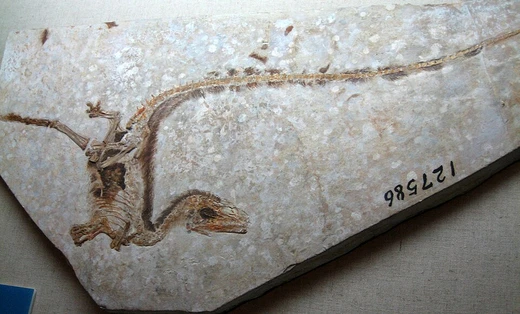
Spinosaurus
Large spinosaurid theropod with a distinctive sail on its back.

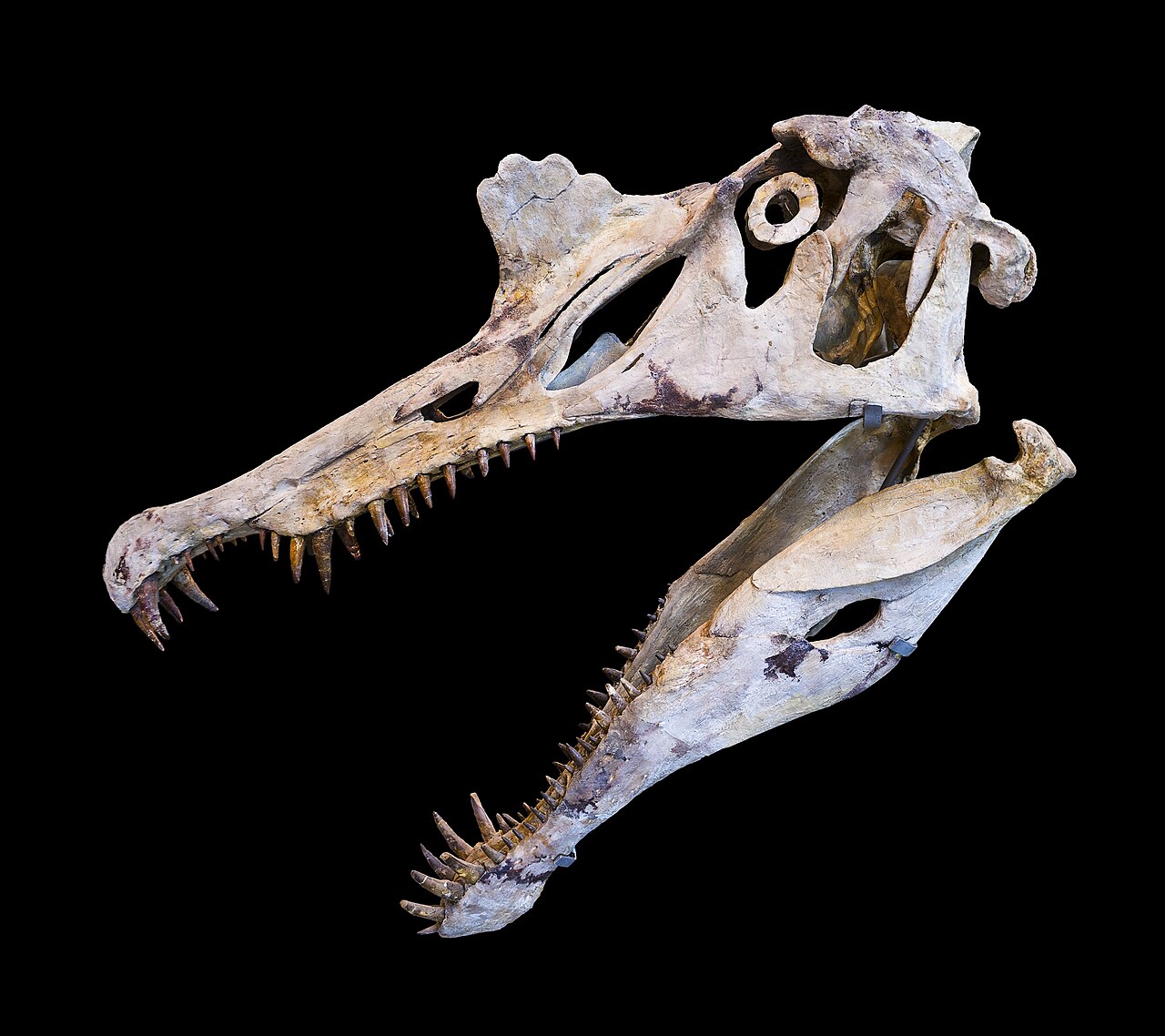
Didier Descouens · CC BY-SA 4.0
Spinosaurus is a genus of large spinosaurid theropod dinosaurs that lived in what is now North Africa during the Cenomanian age of the Late Cretaceous period, about 100 to 94 million years ago. estimating that S. aegyptiacus could have reached about 15 m (49 ft) in length and 7.5 t (8.3 short tons) in body mass.
- other_species
- None widely recognized
Lore & Background
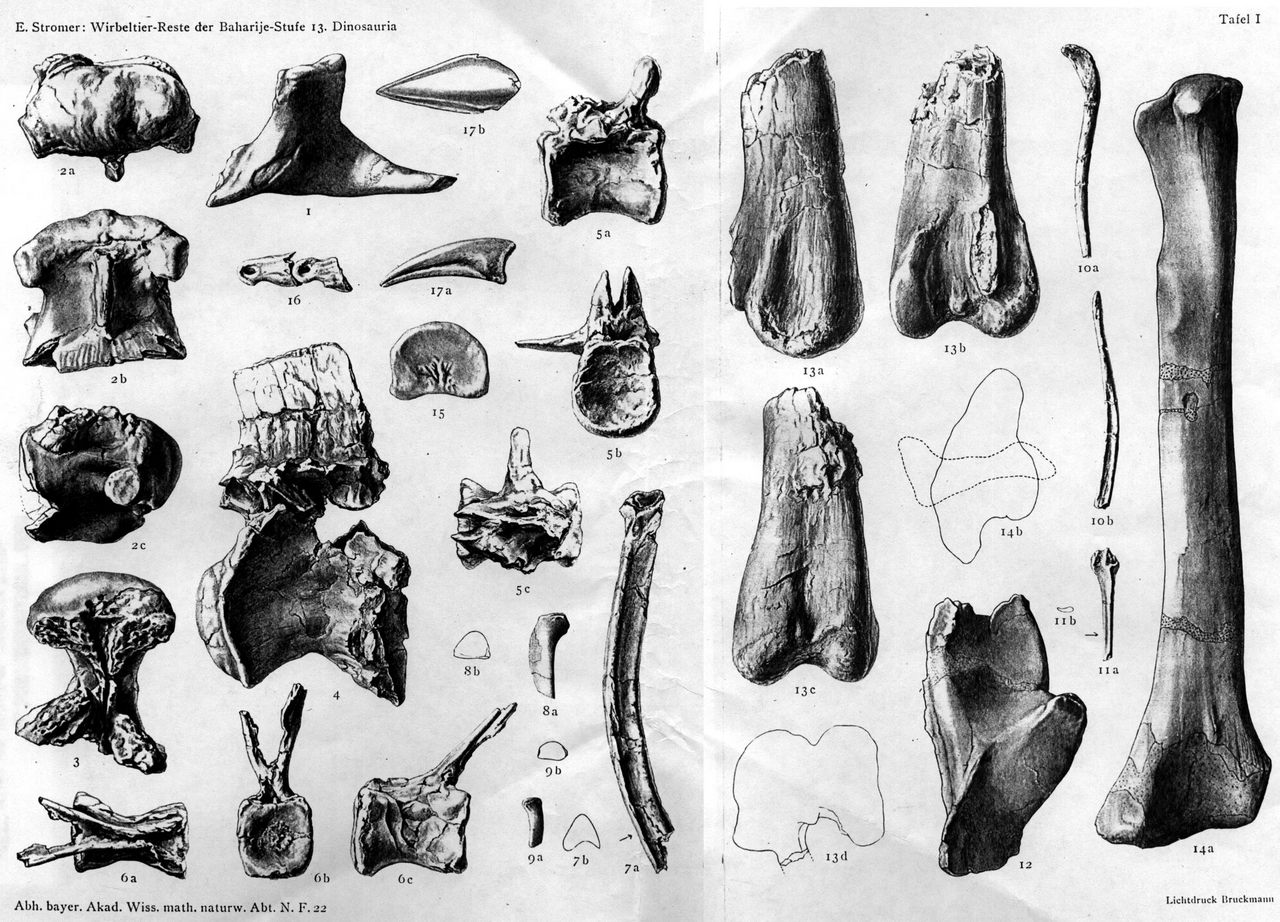
The first discovery of Spinosaurus was in 1897, when French geologist Fernand Foureau unearthed two unusual teeth in Cenomanian-aged sediments of the Djoua Escarpment in what is now southern Algeria. The type specimen included elements of the mandible, maxilla fragment, vertebrae, neural spines, ribs, teeth, gastralia, and a sacrum.
Reader's Guide
Spinosaurus is significant as one of the largest known terrestrial carnivores, comparable to Tyrannosaurus and Giganotosaurus. Its distinctive anatomy—a long, low, narrow skull with conical teeth, large robust forelimbs, a sail-like structure formed by elongated neural spines, and a paddle-like tail—suggests a semiaquatic lifestyle, though the extent of its swimming capability has been strongly contested. The genus is known from fragmentary remains across North Africa, with two proposed species: S. aegyptiacus from Egypt and Morocco, and S. mirabilis from Niger. Possible junior synonyms include Sigilmassasaurus and the dubious S. maroccanus from Morocco and Oxalaia from Brazil, though their validity is debated. Spinosaurus lived in a humid environment of tidal flats and mangrove forests alongside other dinosaurs, fish, crocodylomorphs, squamates, turtles, pterosaurs, and plesiosaurs. Its sail may have been used for thermoregulation or display. The destruction of the original fossils in World War II and subsequent rediscoveries have made Spinosaurus a subject of ongoing research and public fascination.
Did You Know?
- Spinosaurus had neural spines that grew to at least 1.65 m (5.4 ft) long, likely forming a sail-like structure.
- The type species S. aegyptiacus is mainly known from the Bahariya Formation in Egypt and the Kem Kem beds in Morocco.
- Spinosaurus leg bones had high bone density, allowing for better buoyancy control.
The Discovery and the Bombing That Erased It
The story of Spinosaurus begins with a thread of misidentification. Tensions between Stromer and the museum's Nazi-aligned director meant the fossils were never relocated, and they perished in the fire.
Anatomy of a Giant: Skull, Sail, and Paddle Tail
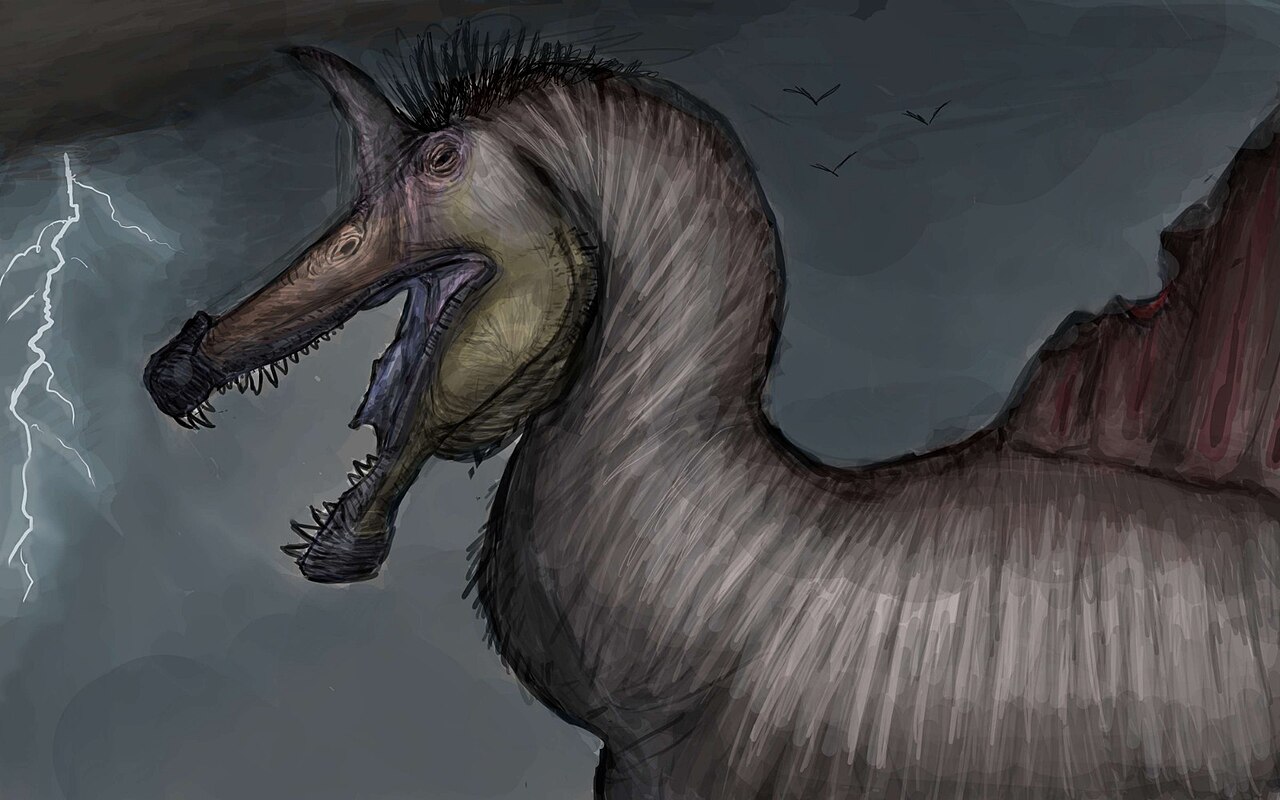
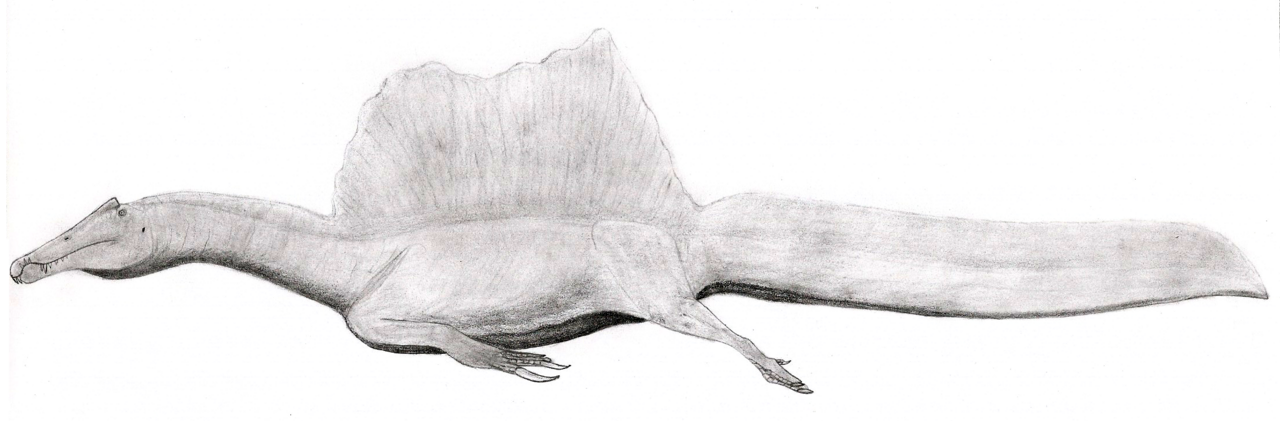
aegyptiacus at roughly fourteen meters in length and seven point four tonnes in mass, making it a rival to Tyrannosaurus, Giganotosaurus, and its contemporary Carcharodontosaurus among Earth's largest land carnivores. Yet its body plan is unlike any of those. The skull was long, low, and narrow—reminiscent of a modern crocodilian—armed with straight, conical teeth that carried few or no serrations. The forelimbs were large and robust, ending in three-fingered hands with an oversized claw on the first digit. The hips were reduced and the legs notably short relative to the torso. The most striking feature remains the dorsal sail: elongated neural spines reaching at least 1.65 meters, almost certainly bridged by skin to form a continuous membrane. The tail, long and narrow, was deepened by tall thin spines and elongated chevrons into a structure resembling a swimming paddle.
Life in the Mangrove Swamps of North Africa
Spinosaurus inhabited the humid coastal landscapes of what is now North Africa during the Cenomanian stage of the Late Cretaceous, roughly 100 to 94 million years ago. Its world was a mosaic of tidal flats and mangrove forests teeming with life: fish, crocodylomorphs, squamates, turtles, pterosaurs, and plesiosaurs all shared the same waterways and shorelines. The dinosaur itself was a mixed-feeding predator, taking both aquatic and terrestrial prey. Fossil evidence points to a semiaquatic lifestyle, though just how proficiently it swam remains hotly debated. One clue lies in the leg bones, which show a high degree of bone density—a trait that would have aided buoyancy control in water. The dorsal sail, meanwhile, may have served thermoregulatory purposes or functioned as a visual display to intimidate rivals or attract mates. Whatever its precise ecological niche, Spinosaurus occupied a dominant predatory role in a richly populated Cretaceous ecosystem.
One Dinosaur or Many? The Taxonomic Tangle
The question of how many species of Spinosaurus actually existed has never been cleanly resolved. The type species, S. aegyptiacus, is documented from the Bahariya Formation in Egypt and the Kem Kem beds of Morocco. A second named species, S. mirabilis, comes from the Farak Formation in Niger. Beyond those, the literature is cluttered with possible junior synonyms: Sigilmassasaurus, the dubious S. maroccanus from the Kem Kem beds, and Oxalaia from Brazil's Alcântara Formation. Each of these has been proposed as either a separate genus or a reassignment into Spinosaurus, and their validity remains contested. With the original fossils lost to war and new material only gradually emerging in the early 21st century, the full taxonomic picture of this genus remains an open question in paleontology.
Common Misconceptions (Editorial)
1. People often think Spinosaurus was primarily a land predator like other large theropods, but the high bone density in its legs supports the idea it had better buoyancy control for a semi-aquatic lifestyle.
2. Some assume multiple species of Spinosaurus are widely recognized, but according to the facts, no other species besides S. aegyptiacus is widely recognized.
3. The sail-like structure on its back is sometimes thought to be purely for display, but the neural spines grew at least 1.65 m (5.4 ft) long — though the facts do not specify its purpose, so this point is corrected only by confirming the length, not the function.
Why It Matters (Editorial)
Spinosaurus endures in the public imagination because it challenges our image of dinosaurs as purely terrestrial giants — it may have been a river-dwelling predator uniquely adapted to water. Its enormous size and bizarre sail also make it a striking symbol of how much we still have to learn about prehistoric life, as new discoveries continue to reshape our understanding of its habits and environment.
Gallery
Frequently Asked Questions
Who is Spinosaurus?
Spinosaurus is a genus of large spinosaurid theropod that roamed what is now North Africa during the Late Cretaceous, roughly 100 to 94 million years ago. It is best recognized for the tall sail running along its back and for ranking among the biggest land-dwelling carnivores ever identified.
Where and when did Spinosaurus live?
This dinosaur inhabited the floodplain environments of present-day North Africa during the Cenomanian stage of the Late Cretaceous, approximately 100 to 94 million years ago. Its distinctive sail-shaped neural spines and semi-aquatic adaptations set it apart from most other theropods of that era.
Why is Spinosaurus a fan favorite?
Its dramatic sail and status as one of the largest land predators ever identified give it a striking visual presence that few other dinosaurs match. The tragic loss of its original fossils also keeps it in the spotlight of paleontology discussions about specimen preservation and how we reconstruct lost animals.
More in Dinosaurs 1-22
Spotted an error? Know more?
This is a living reference — every entry is fact-audited, and reader corrections feed straight into our audit queue. Suggest an edit · See this site's audit record