Pteranodon
Toothless pterosaur from the Late Cretaceous of North America.
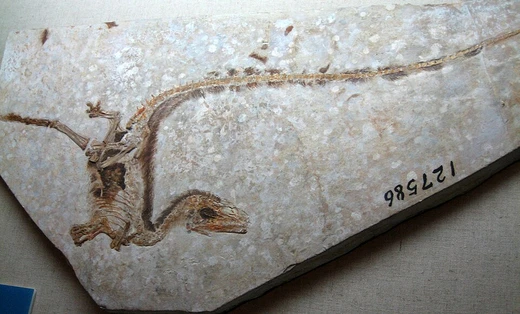
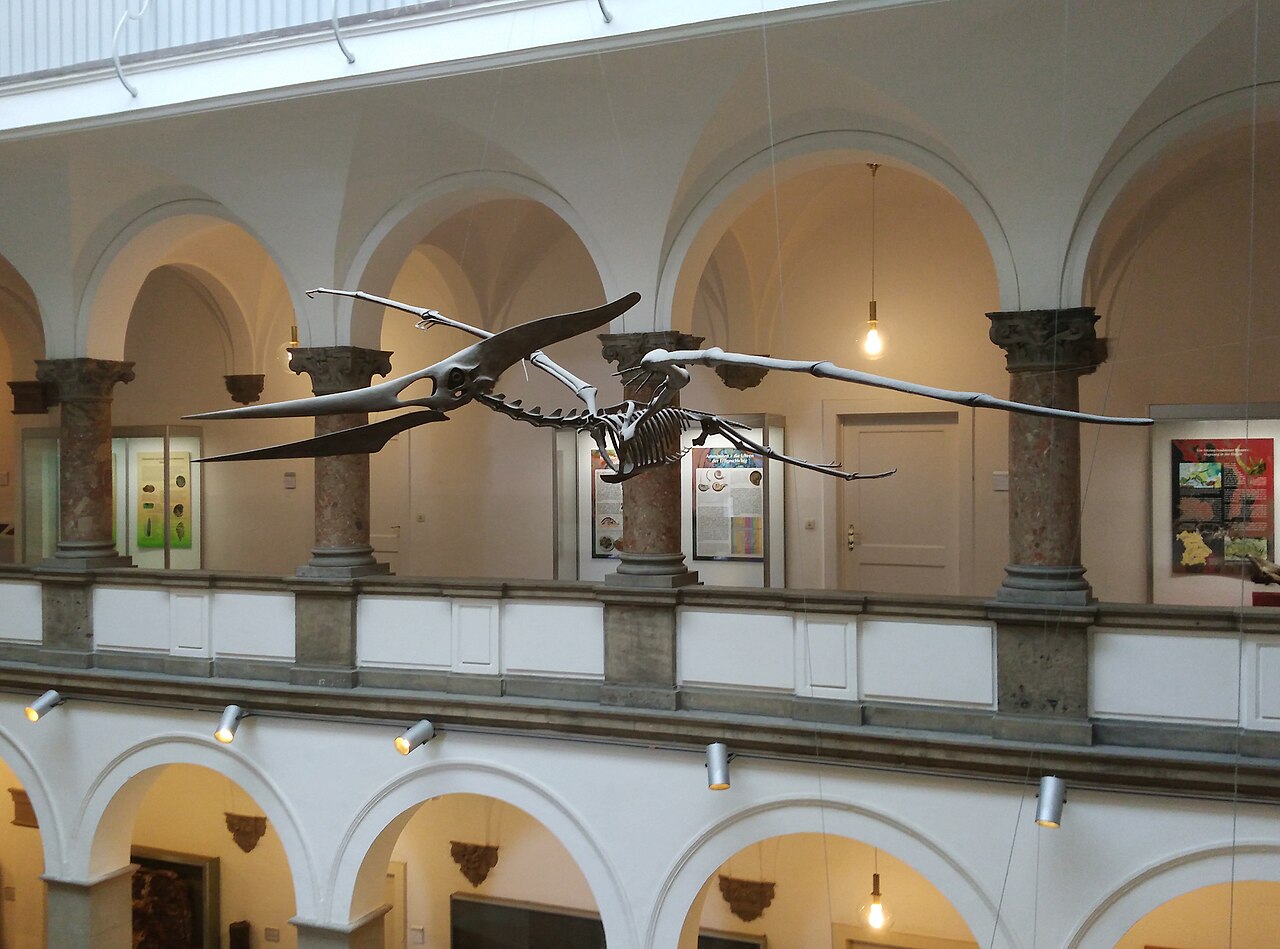
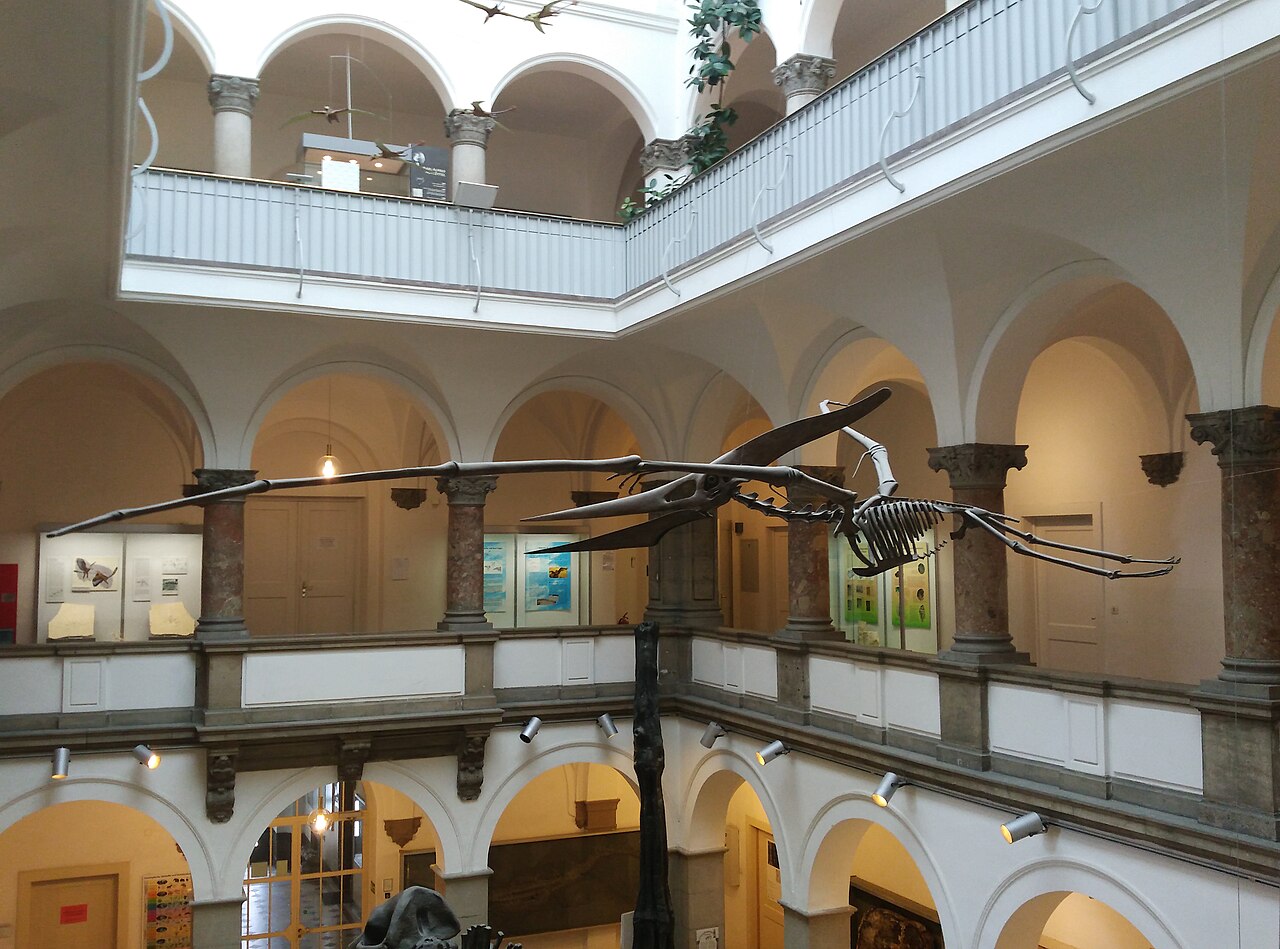
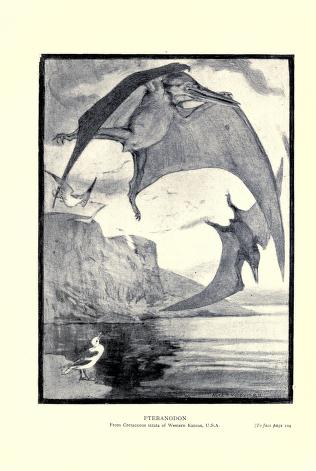
Pteranodon is a genus of pterosaur that included some of the largest known flying reptiles, with P. longiceps having a wingspan of over 6 m (20 ft). They lived during the late Cretaceous geological period of North America in present-day Kansas, Nebraska, Wyoming, South Dakota and Alabama. More fossil specimens of Pteranodon have been found than any other pterosaur, with about 1,200 specimens known to science, many of them well preserved with nearly complete skulls and articulated skeletons. It was an important part of the animal community in the Western Interior Seaway.
- lived
- Late Cretaceous
- location
- North America (Kansas, Nebraska, Wyoming, South Dakota, Alabama)
- wingspan
- Up to 7.6 m (25 ft) in males
- known_for
- Largest known flying reptiles; first pterosaur found outside Europe; toothless skull with bony crest
- type_species
- Pteranodon longiceps
- specimens_found
- About 1,200
Lore & Background
When the first fossils of Pteranodon were found, they were assigned to toothed pterosaur genera, including Ornithocheirus and Pterodactylus. Over the decades, multiple species would be assigned to Pteranodon, though today, only two are recognised: P. longiceps, the type species, and P. sternbergi. A third species, P. maiseyi, may also exist. Some researchers have suggested the latter two as a genus of their own, Geosternbergia, though this is the subject of some debate. Another genus split from Pteranodon, Dawndraco, may be synonymous with Geosternbergia if that genus is valid, or with Pteranodon if it is not. Two distinct morphs of Pteranodon specimen have been found, that are thought to represent males and females. Male and female Pteranodon differed in size and crest shape. Males attained wingspans of 5.6–7.6 m (18–25 ft); females were smaller, averaging 3.8 m (12 ft). The crests of males were far larger than those of females. In P. longiceps, they were long and backswept, whereas in P. sternbergi, they were tall and upright. Females also had wider pelvises than males.
Reader's Guide
Pteranodon is significant as the first pterosaur found outside Europe and as one of the most completely known pterosaurs, with over 1,200 specimens, many with nearly complete skulls and articulated skeletons. Its toothless skull distinguished it from all previously known pterosaurs at the time of its naming. The genus has a complex taxonomic history, with multiple species assigned and later reduced, and ongoing debate about whether some species belong to separate genera such as Geosternbergia or Dawndraco. Pteranodon is part of the family Pteranodontidae, within the clade Pteranodontia, which also includes nyctosaurids. While not dinosaurs, pterosaurs such as Pteranodon form a clade closely related to dinosaurs as both fall within the clade Avemetatarsalia. The discovery of distinct male and female morphs, differing in size and crest shape, provides insight into the biology and behavior of these flying reptiles.
Did You Know?
- Pteranodon was the first pterosaur found outside of Europe.
- Its name means 'wing without tooth' from Ancient Greek.
- Male Pteranodon had wingspans up to 7.6 m (25 ft), while females averaged 3.8 m (12 ft).
- More fossil specimens of Pteranodon have been found than any other pterosaur, about 1,200.
The Rivalry That Forged a Name
The story of Pteranodon begins with one of paleontology's most famous feuds. In the early 1870s, Othniel Charles Marsh unearthed partial wing bones from the Smoky Hill Chalk deposits of western Kansas, the first pterosaur material ever recovered outside of Europe. He initially assigned the specimens to the European genus Pterodactylus, coining the name Pterodactylus occidentalis after discovering his original name had already been taken. Almost simultaneously, his rival Edward Drinker Cope was excavating similar large pterosaur remains and published his own species names under the genus Ornithochirus. Modern re-evaluation has largely vindicated Marsh, confirming that the specimens both men collected belonged to the same remarkable animal. What began as a naming contest over wing bones would ultimately reshape our understanding of prehistoric flight.
The Skull That Changed Everything
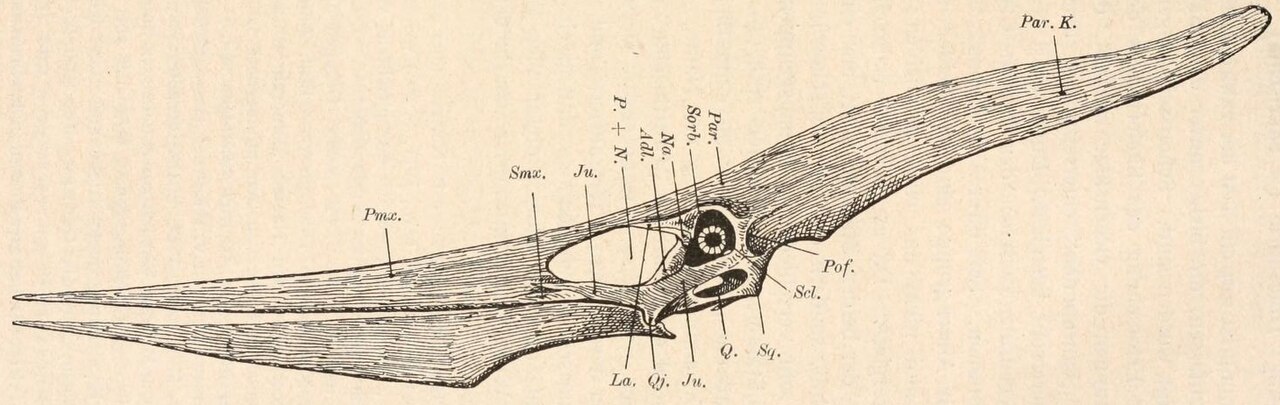
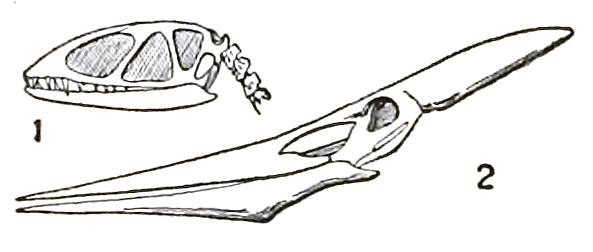
This find, along with a smaller skull discovered shortly after, revealed something extraordinary: the large North American pterosaurs that Marsh and Cope had been arguing over possessed no teeth at all, a trait unmatched by any previously known pterosaur. Marsh immediately recognized the significance, describing the specimens as distinguished from all earlier pterosaur genera by their complete absence of teeth. He coined the name Pteranodon, drawing from the Greek for 'wing' and 'toothless,' and swept all previously described North American species into the new genus. In doing so, he named P. longiceps for the larger skull and P. occidentalis for the smaller one, while also introducing several additional species based on fragmentary material. Some of these, like P. gracilis and P. nanus, would later be reclassified as Nyctosaurus.
Two Forms, One Genus
Among the roughly 1,200 Pteranodon specimens known to science, researchers have identified two distinct morphs that appear to represent males and females, revealing a degree of sexual dimorphism that helps explain the wide size range once attributed to multiple species. Males reached impressive wingspans of 5.6 to 7.6 meters, while females averaged around 3.8 meters, making them noticeably smaller. The most striking difference, however, lies in the bony crests atop their skulls. In the type species P. longiceps, male crests were long and swept backward, whereas in P. sternbergi they rose tall and upright. In both species, the male crests were dramatically larger than those of females. Additionally, females possessed wider pelvises than their male counterparts, a trait consistent with reproductive biology. Today, only two species are firmly recognized within Pteranodon—P. longiceps and P. sternbergi—though a third, P. maiseyi, has been proposed. Some researchers have even argued that the latter two belong to a separate genus called Geosternbergia, a classification that remains debated. The genus Dawndraco, once split from Pteranodon, may prove synonymous with whichever of these two names is ultimately accepted.
Giants of the Western Interior Seaway
During the late Cretaceous, a vast shallow sea called the Western Interior Seaway stretched across the middle of the North American continent, and Pteranodon was one of its most prominent aerial residents. Fossils of this genus have been recovered from present-day Kansas, Nebraska, Wyoming, South Dakota, and Alabama, testifying to its wide distribution across this ancient marine environment. No other pterosaur genus has yielded so many specimens to science; approximately 1,200 are known, many remarkably well preserved with nearly complete skulls and fully articulated skeletons. In the broader tree of life, Pteranodon sits within the family Pteranodontidae and the clade Pteranodontia, a group that also encompasses nyctosaurids. Together, these form the larger superfamily Pteranodontoidea alongside ornithocheiromorphs, all falling under the suborder Pterodactyloidea. Though pterosaurs are not dinosaurs, they share a close evolutionary relationship through the clade Avemetatarsalia, making Pteranodon a near relative of the dinosaurs that roamed the same Cretaceous landscapes. Its abundance in the fossil record and its position in this well-defined lineage make it one of the best-understood flying reptiles of the Mesozoic era.
Common Misconceptions (Editorial)
1. Many people assume Pteranodon had teeth, but its name means "wing without tooth," and it had a toothless skull with a bony crest. 2. Some think Pteranodon was a dinosaur; it was actually a pterosaur, a distinct group of flying reptiles that lived during the late Cretaceous. 3. It is often believed that all Pteranodon were the same size, but males reached wingspans up to 7.6 m (25 ft) while females averaged only 3.8 m (12 ft), and they differed in crest shape and pelvis width.
Why It Matters (Editorial)
Pteranodon endures as a cultural icon of prehistoric flight because its sheer size and distinctive crest challenge our imagination of what flying animals can achieve. With more than 1,200 known specimens, it offers paleontologists an unusually detailed window into the life, growth, and sexual differences of pterosaurs, helping to anchor our understanding of an era when the skies over North America were ruled by creatures far larger than any bird alive today.
Gallery
Frequently Asked Questions
What is Pteranodon?
Pteranodon is a genus of prehistoric flying reptile (pterosaur) that roamed the skies during the Late Cretaceous. It is best remembered for producing some of the biggest creatures ever to achieve true flight, and its type species is P. longiceps.
How big was Pteranodon?
Males could stretch their wings out to roughly 7.6 meters (about 25 feet), placing them near the top of the list for the largest animals to fly. The species P. longiceps alone tipped past 6 meters from wingtip to wingtip.
Where did Pteranodon live?
Its fossils come from the central and southern United States—states like Kansas, Nebraska, Wyoming, South Dakota, and Alabama—dating to the Late Cretaceous. It was a major player in the food web surrounding the ancient Western Interior Seaway.
Why is Pteranodon a big deal in paleontology?
It holds the distinction of being the first pterosaur ever described from material found outside Europe. It also has the richest fossil record of any pterosaur, with around 1,200 specimens catalogued, many of them strikingly complete with intact skulls and jointed skeletons.
What does a Pteranodon skull look like?
The most striking features are its total lack of teeth and the tall, bony crest arching off the top of the skull. The long, pointed beak and that crest together give Pteranodon its instantly recognizable silhouette.
More in Dinosaurs 1-22
Spotted an error? Know more?
This is a living reference — every entry is fact-audited, and reader corrections feed straight into our audit queue. Suggest an edit · See this site's audit record