Triceratops
A three-horned ceratopsian dinosaur from the Late Cretaceous.

DataBase Center for Life Science (DBCLS) · CC BY 4.0
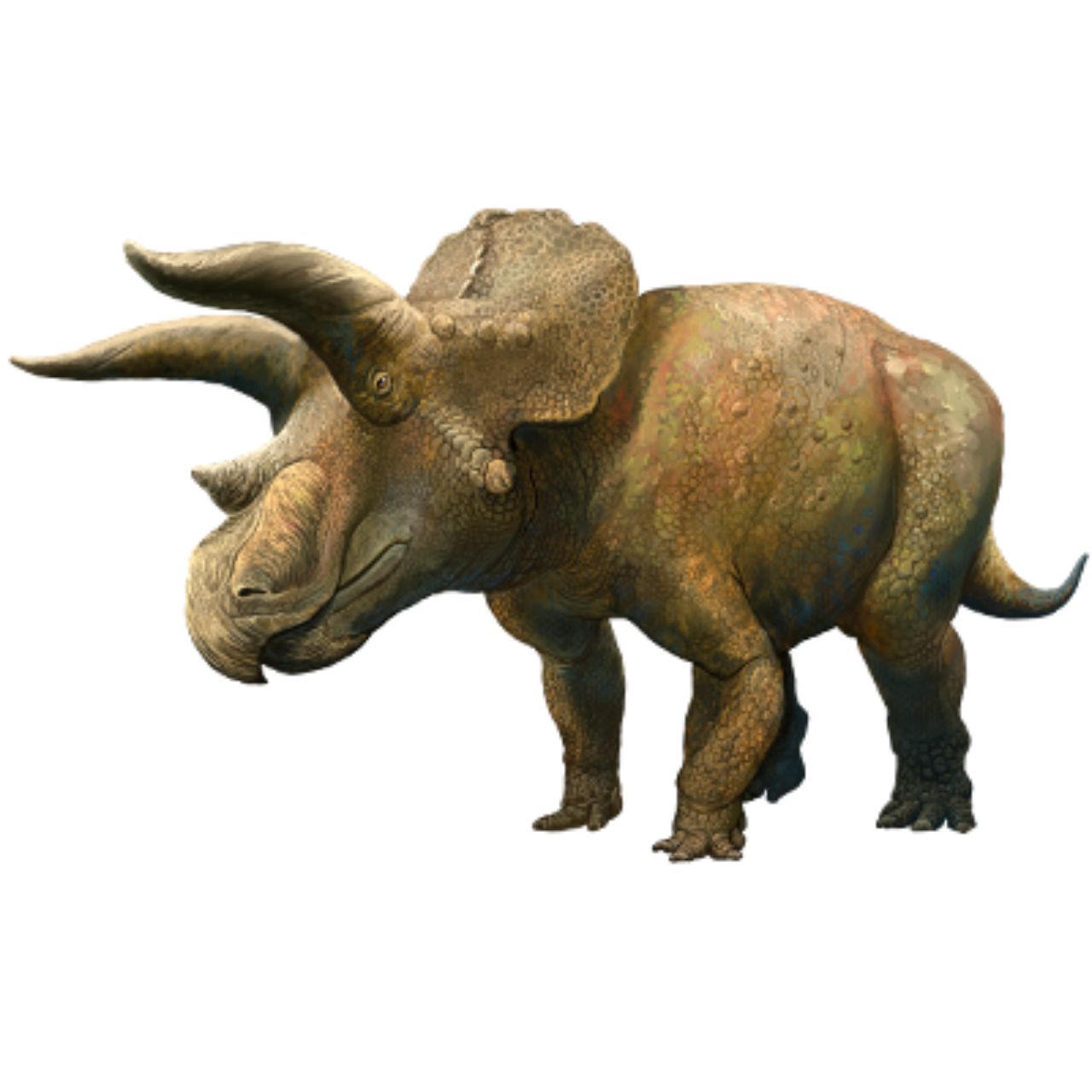
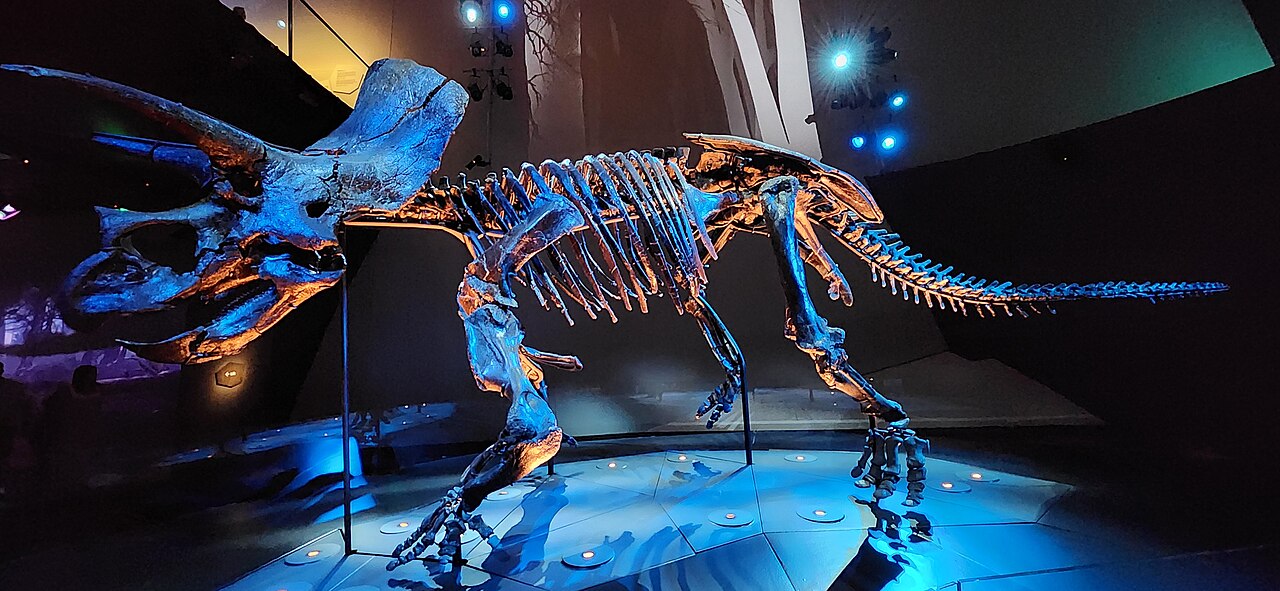
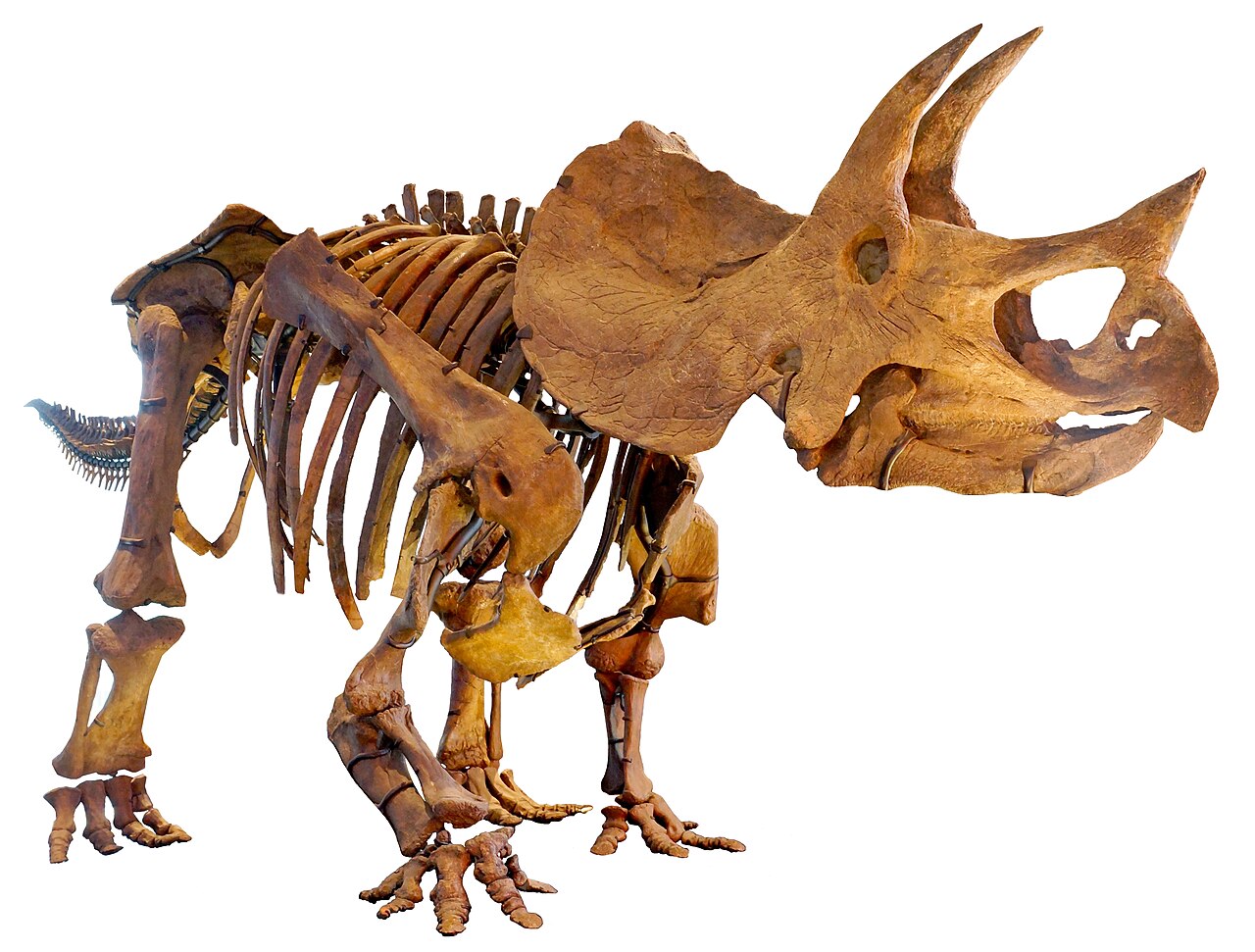
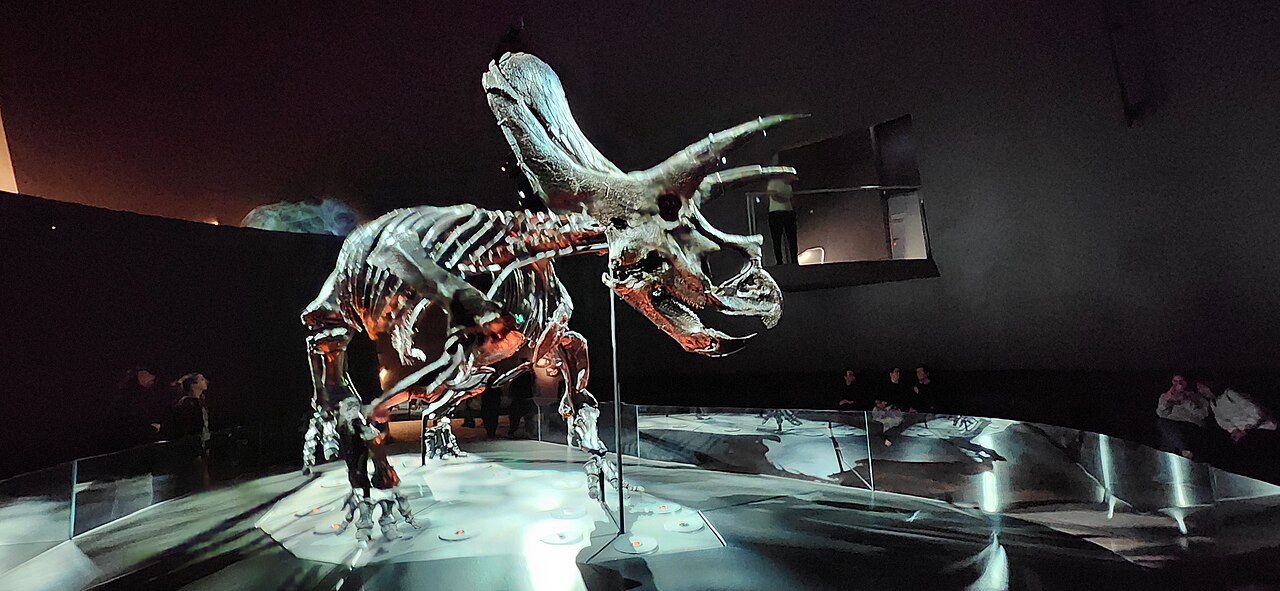
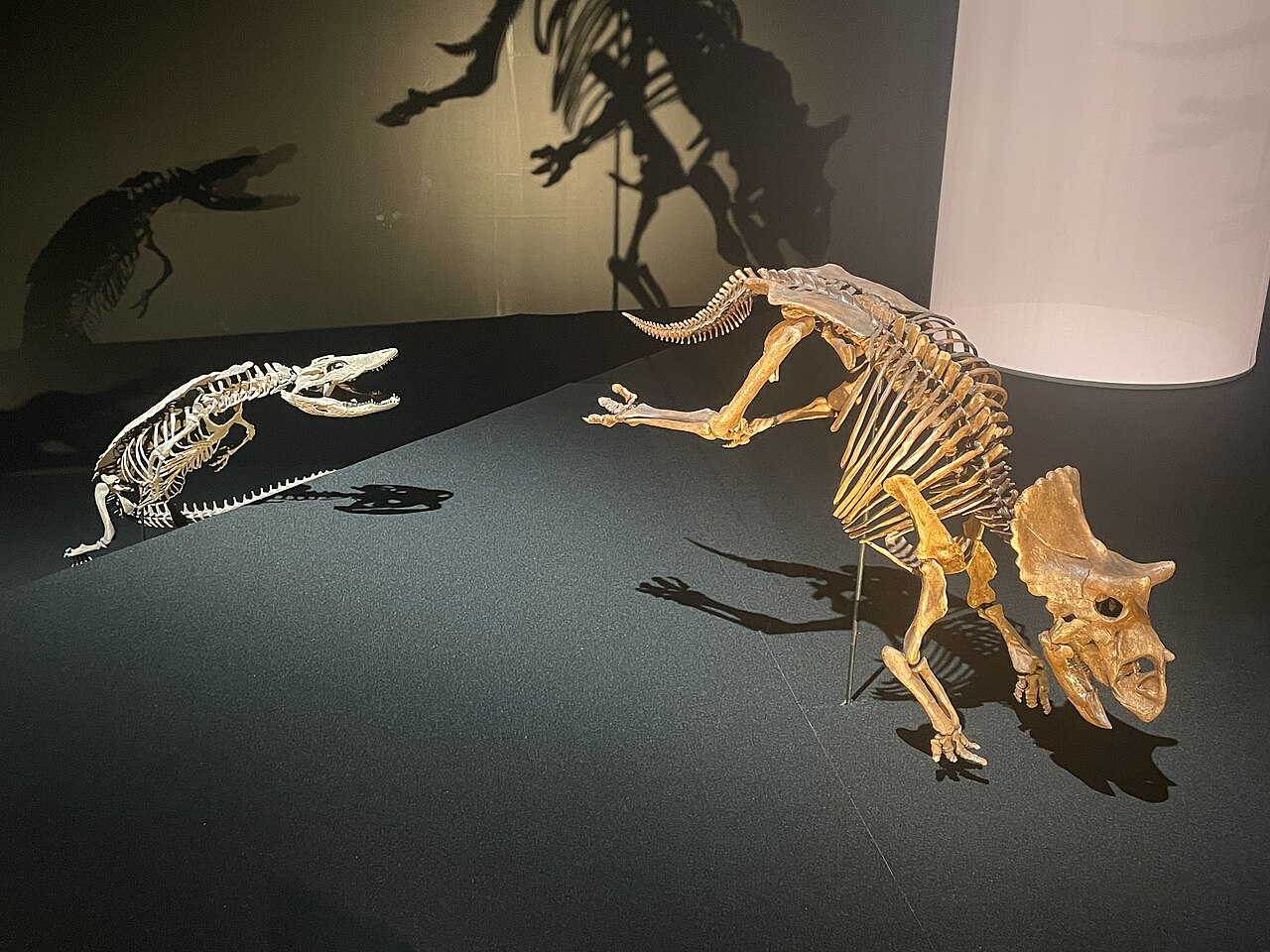
Triceratops (try-SERR-ə-tops; lit. 'three-horned face') is a genus of chasmosaurine ceratopsian dinosaur that lived during the late Maastrichtian age of the Late Cretaceous period, about 69 to 66 million years ago on the island continent of Laramidia, now forming western North America. It was one of the last-known non-avian dinosaurs and lived until the Cretaceous–Paleogene extinction event 66 million years ago. Bearing a large bony frill, three horns on the skull, and a large, four-legged body, Triceratops is one of the most recognizable of all dinosaurs and the best-known ceratopsian.
- time_period
- Late Cretaceous (late Maastrichtian), about 69 to 66 million years ago
- location
- Laramidia (now western North America)
- length
- 8–9 m (26–30 ft)
- weight
- 6–10 t (5.9–9.8 long tons; 6.6–11.0 short tons)
- valid_species
- T. horridus and T. prorsus
- known_for
- Three-horned face, large bony frill, and being preyed upon by Tyrannosaurus rex
Lore & Background
This specimen was sent to Othniel Charles Marsh, who initially believed it belonged to a large bison, naming it Bison alticornis. It took a third and much more complete skull for Marsh to change his mind. Wilson discovered a monstrous skull poking out of a ravine. Marsh first named it Ceratops horridus, but upon uncovering a third nose horn, he gave it the new generic name Triceratops.
Reader's Guide
Triceratops is one of the most beloved and popular dinosaurs, featured in numerous films, postage stamps, and other media. It shared the landscape with and was most likely preyed upon by Tyrannosaurus rex. The functions of its frills and three distinctive facial horns have inspired countless debates; traditionally viewed as defensive weapons, more recent interpretations suggest they were primarily used in species identification, courtship, and dominance display. Research published in 2010 argued that the contemporaneous Torosaurus represents Triceratops in its mature form, but this view has been highly disputed, with some morphometric research and the apparent existence of authentic Torosaurus subadults favoring the distinctness of the two genera. Two species, T. horridus and T. prorsus, are considered valid today, though seventeen different species have been named throughout history.
Did You Know?
- The name Triceratops means 'three-horned face' in Ancient Greek.
- It was one of the last-known non-avian dinosaurs, living until the Cretaceous–Paleogene extinction event 66 million years ago.
- Specimens representing life stages from hatchling to adult have been found.
- The first named fossil attributed to Triceratops was initially thought by Othniel Charles Marsh to belong to a large bison, which he named Bison alticornis.
Physical Form and the Mystery of the Horns
Triceratops is one of the most instantly recognizable dinosaurs in the public imagination, and for good reason. Standing as a massive four-legged herbivore reaching roughly eight to nine meters in length and weighing between six and ten tonnes, it presents a silhouette that has drawn a striking parallel to modern rhinoceroses through convergent evolution. Its skull is crowned with a broad bony frill and three prominent horns, features that have generated decades of scientific debate. Early paleontologists tended to interpret these structures as defensive armaments against predators like Tyrannosaurus rex, which likely hunted Triceratops in the same Late Cretaceous landscapes. More recent thinking, however, tilts toward a social function: the frills and horns may have served primarily for species recognition, courtship rituals, and establishing dominance hierarchies. Modern cladistic analyses further complicate the picture by placing Triceratops within Chasmosaurinae, a subfamily typically associated with long frills, challenging the older short-frilled grouping. This reframes Triceratops not merely as a prey animal bracing for attack, but as a socially complex creature whose elaborate headgear was a language of identity and status.
The Long Road to a Name
The journey from a puzzling bone fragment to one of paleontology's most celebrated names was far from simple. The specimen was forwarded to Othniel Charles Marsh, who believed the host rock was Pliocene in age and that the bones belonged to an exceptionally large bison, which he named Bison alticornis. Even after describing the genus Ceratops the following year from fragmentary material, Marsh maintained his mammalian reading. A far more complete skull was needed to change his mind. Hatcher was sent to the site after a rancher displayed a broken horn to him. The horn had been torn free when cowboy Edmund B. Wilson tried to lasso a monstrous skull jutting from a ravine wall; the skull crashed to the bottom of the cleft. Marsh first described the piece as Ceratops horridus, but once preparation exposed a third, nasal horn, he erected the new genus Triceratops and folded his earlier bison into the ceratopsian family.
Taxonomic Turmoil and the Torosaurus Question
Triceratops has attracted an extraordinary number of species names over the decades. horridus and T. prorsus—survive as valid in modern taxonomy. Much of the inflation stemmed from the natural variation among large, three-dimensional skulls belonging to individuals of different ages and sexes, all subjected to varying degrees and directions of compressive pressure during fossilization. A far more contentious question emerged in 2010, when researchers proposed that Torosaurus, a ceratopsid long treated as a separate genus, was simply Triceratops in its mature form. That hypothesis has been fiercely contested; morphometric analyses and the apparent existence of genuine Torosaurus subadults lead many newer studies to maintain that the two genera remain distinct.
A Last Survivor and a Cultural Icon
Triceratops occupied a remarkable position at the very end of the dinosaur era. Living on the island continent of Laramidia during the late Maastrichtian, roughly 69 to 66 million years ago, it was among the final non-avian dinosaurs to walk the Earth before the Cretaceous–Paleogene extinction event wiped out its kind. Its world overlapped with that of Tyrannosaurus rex, and the two likely shared the same Late Cretaceous landscapes of what is now western North America. Yet Triceratops has outlived its contemporaries in the public imagination far more dramatically. As the archetypal ceratopsian, it is one of the most beloved dinosaurs in popular culture, appearing in countless films, on postage stamps, and across a wide range of media. Fossil specimens spanning every life stage from hatchling to full adult have been documented, giving researchers and the public alike an unusually complete picture of its growth. The genus name itself, drawn from Ancient Greek for three-horned face, has become almost synonymous with the dinosaur era in the popular mind.
Common Misconceptions (Editorial)
A common misconception is that Triceratops lived alongside other dinosaurs across all of North America, but the facts confirm it was restricted to the island continent of Laramidia (now western North America). Another misunderstanding is that the name Triceratops was applied immediately after its first discovery; in reality, the first fossil was named *Bison alticornis* by Othniel Charles Marsh, who thought it belonged to a large bison before later assigning the name *Triceratops*.
Why It Matters (Editorial)
Triceratops endures as a cultural icon not only because of its dramatic three-horned skull and massive frill, but also because it represents the final chapter of the non-avian dinosaurs, living right up to the catastrophic extinction event 66 million years ago. Its well-documented life stages and direct predator-prey relationship with *Tyrannosaurus rex* give us a rare, intimate window into the complex ecology of the Late Cretaceous.
Gallery
Frequently Asked Questions
What is Triceratops?
Triceratops is a large, four-legged ceratopsian dinosaur instantly recognizable by its three prominent skull horns and broad bony frill. It belongs to the chasmosaurine subgroup and stands as one of the most iconic dinosaurs in popular culture.
When and where did Triceratops live?
This herbivore roamed the island continent of Laramidia—roughly today's western North America—during the late Maastrichtian stage, about 69 to 66 million years ago. It persisted all the way until the Cretaceous–Paleogene extinction event that eliminated non-avian dinosaurs.
How big was Triceratops?
Adults stretched roughly 8 to 9 meters (about 26–30 feet) from snout to tail and weighed somewhere between 6 and 10 tonnes, placing them among the heaviest plant-eaters of the Late Cretaceous.
What are the two valid Triceratops species?
Current taxonomy recognizes T. horridus and T. prorsus as the only valid species within the genus, though researchers still debate whether additional specimens represent further distinct forms.
More in Dinosaurs 1-22
Spotted an error? Know more?
This is a living reference — every entry is fact-audited, and reader corrections feed straight into our audit queue. Suggest an edit · See this site's audit record