Velociraptor
Small feathered dromaeosaurid from Late Cretaceous Asia.

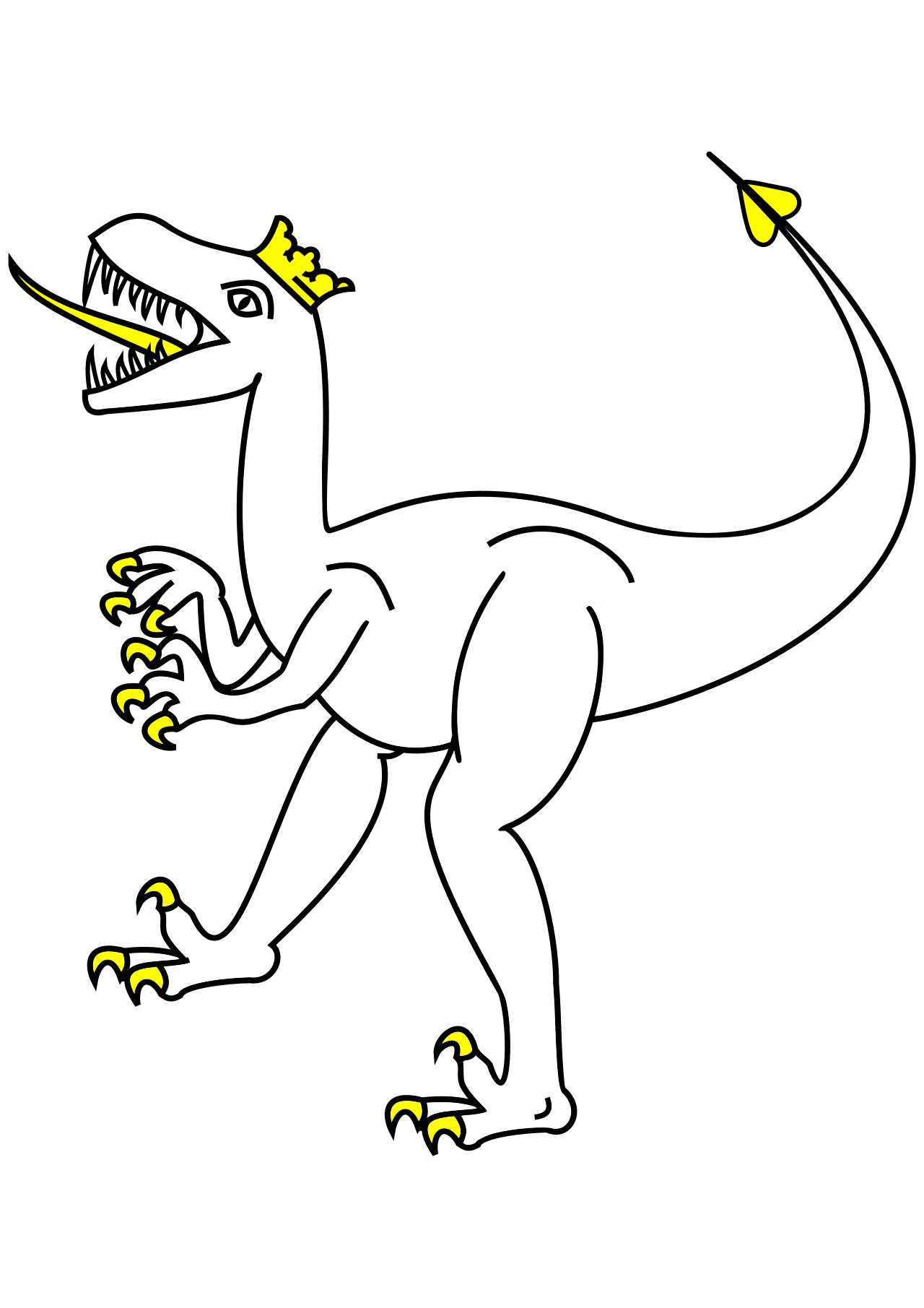
Pixabay user OpenClipart-Vectors · CC0
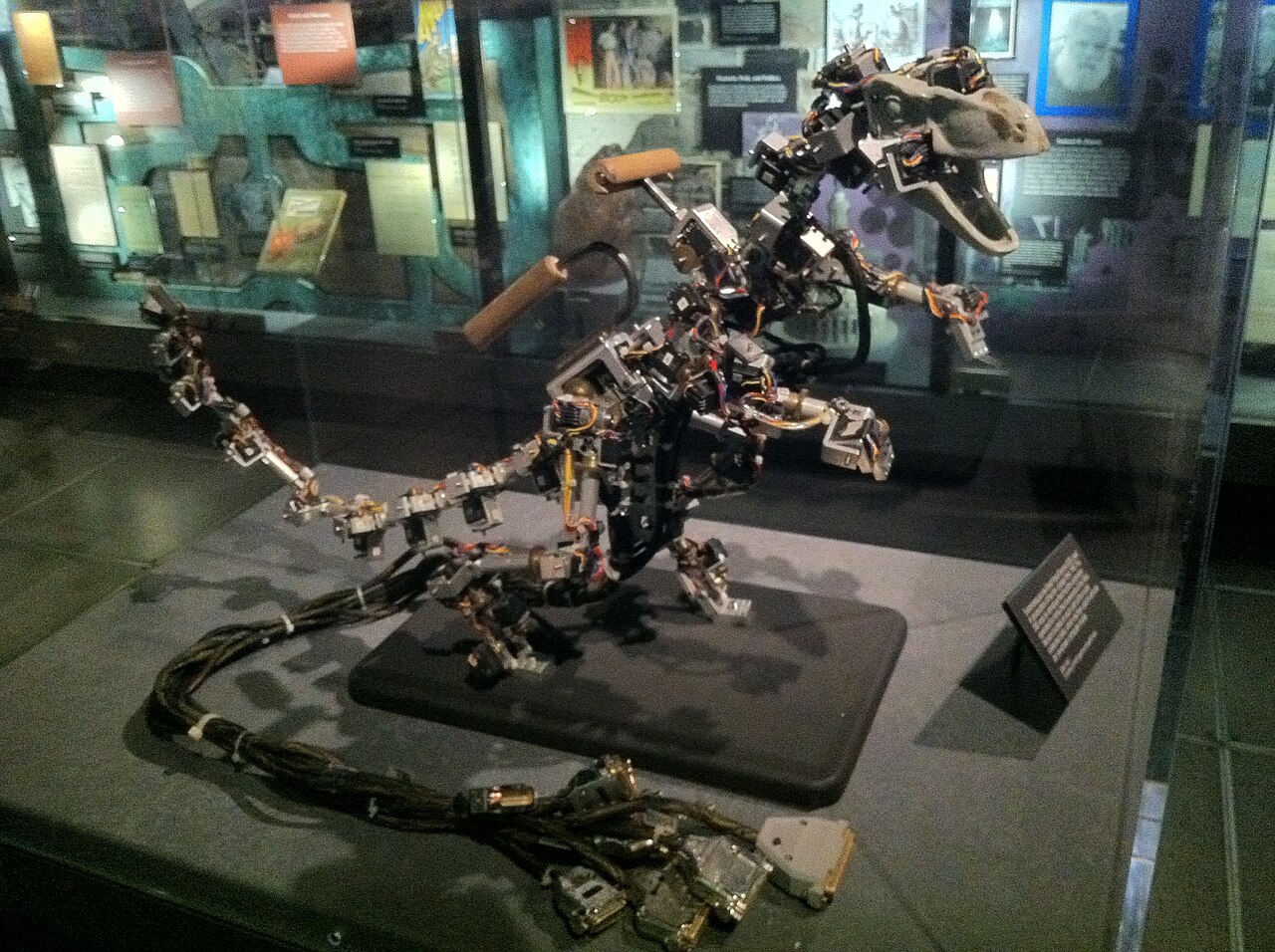
Velociraptor is a genus of small dromaeosaurid dinosaurs that lived in Asia during the Late Cretaceous epoch, about 75 million to 71 million years ago. Two species are currently recognized: the type species V. osmolskae, named in 2008 for skull material from the Bayan Mandahu Formation, China. Velociraptor is one of the dinosaur genera most familiar to the general public due to its prominent role in the Jurassic Park films, though in reality it was roughly the size of a turkey, considerably smaller than its cinematic depiction.
- born
- about 75 million years ago
- died
- about 71 million years ago
- field
- Paleontology
- nationality
- Asia (Mongolia, China)
- known_for
- Small feathered dromaeosaurid with sickle-shaped claw; famous 'Fighting Dinosaurs' specimen locked in combat with Protoceratops
Lore & Background
mongoliensis was named after its country of origin. Earlier that year, Osborn had informally mentioned the animal under the name 'Ovoraptor djadochtari' in a newspaper article, but this was a nomen nudum (a bare name) and was never formally published; it is therefore not an official designation, and the nomenclatural history is more nuanced than simply a name change to V. mongoliensis. During the Cold War, Soviet and Polish scientists, collaborating with Mongolian colleagues, recovered several more specimens.
Reader's Guide
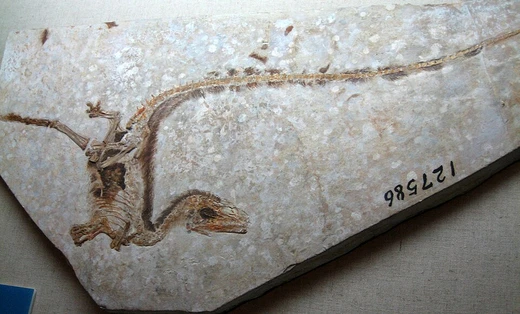
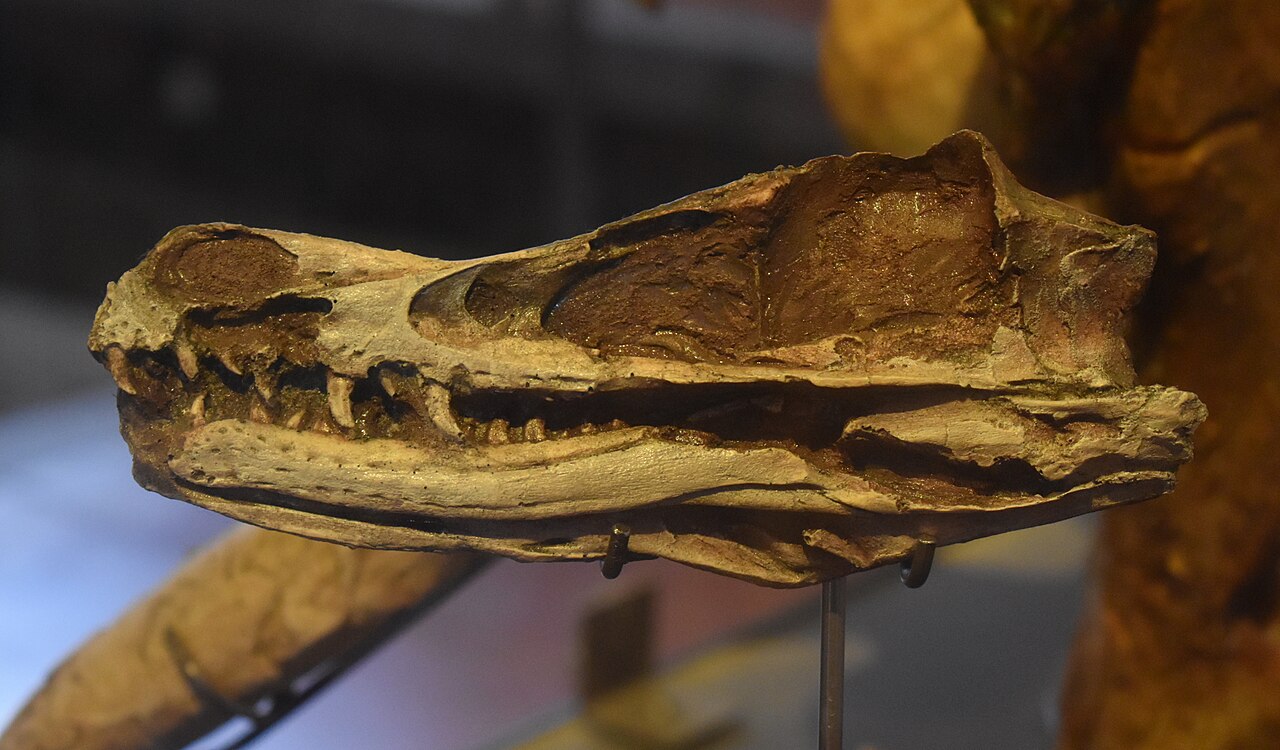
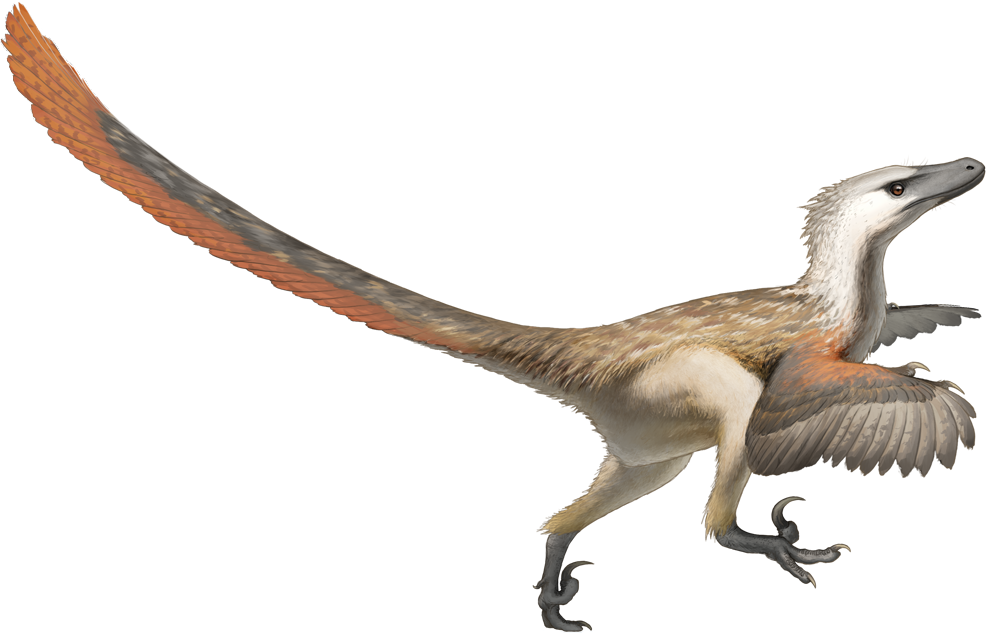
Velociraptor holds a unique place in both paleontology and popular culture. In reality, it was a small, feathered carnivore about 1.5–2.07 m long and weighing 14.1–19.7 kg, with a long tail and an enlarged sickle-shaped claw on each hindfoot used to tackle prey. Its skull was long and low with an upturned snout. Despite its small size, Velociraptor is widely recognized due to the Jurassic Park films, which based their larger, more formidable raptors on the related genus Deinonychus. Over a dozen described fossil skeletons have made Velociraptor well known to paleontologists, and ongoing research continues to refine its taxonomy and ecology.
Did You Know?
- Velociraptor was roughly the size of a turkey, not the 2 m long, 90 kg reptiles seen in Jurassic Park films.
- The name Velociraptor means 'swift thief' in Latin, referring to its cursorial nature and carnivorous diet.
- Quill knobs on a Velociraptor ulna suggest it had wing feathers, though the specimen's referral to the genus may require reevaluation.
Discovery in the Gobi
On August 3, at the Tugriken Shire locality within the Djadokhta Formation, researchers Tomasz Jerzykiewicz, Maciej Kuczyński, Teresa Maryańska, Edward Miranowski, Altangerel Perle, and Wojciech Skarżyński uncovered a sedimentary block containing two animals locked together in what appeared to be a fatal struggle. The specimen was first spotted because fragments of a Protoceratops skull lay overlapping the surface sediments, drawing the team's attention to the excavation site. Once freed from the rock, the pose was unmistakable: a Velociraptor mongoliensis and a Protoceratops andrewsi preserved mid-combat. The pair was immediately nicknamed the Fighting Dinosaurs.
Geological Setting and Age
Pinpointing the exact age of the Fighting Dinosaurs has proven more challenging than one might expect. The Djadokhta Formation, a sedimentary unit rich in fossils, lacks the ideal stratigraphic sections and plant fossils needed to correlate it cleanly with neighboring geological units. In 2005, Demberelyin Dashzeveg and colleagues addressed this by splitting the formation into two members: the older Bayn Dzak Member below and the younger Turgrugyin Member above, both sharing broadly similar depositional environments. The Tugriken Shire locality where the pair was found falls within the Turgrugyin Member. Using magnetostratigraphic techniques applied to sediments from both the Bayn Dzak and Tugriken Shire sites, the team established that the formation accumulated roughly between 75 and 71 million years ago, placing it squarely in the Campanian stage of the Late Cretaceous. This means the two dinosaurs locked in their final struggle lived during a period when the Gobi region was a vast, sediment-rich landscape, and their bones were ultimately entombed in the fine-grained deposits that would preserve them for millennia.
Competing Theories of Death and Burial
Since its excavation, paleontologists have proposed several competing explanations for how both animals ended up preserved together. They observed the Velociraptor's right hand caught in the prey's jaws, its left clawing at the skull, and its feet aimed at the throat. Unwin's team concluded a sandstorm buried the pair alive and that the raptor dispatched its prey with kicks. Kenneth Carpenter offered a different scenario in 1998: the sickle claw served as a piercing tool, inflicting throat wounds that bled the Protoceratops to death. In its last act, the prey clamped its jaws around the predator's right hand, holding it fast beneath its body until the Velociraptor desiccated. Both were then covered by sandy sediments, and the raptor's missing limbs were later removed by scavengers.
Legacy and Ongoing Research
The Fighting Dinosaurs occupies a singular place in paleontological history as one of the few specimens offering direct, unambiguous evidence that non-avian theropods were active predators rather than mere scavengers. Yet the specimen continues to yield new information. In 2016, Barsbold reported anomalies in the Protoceratops individual, including small bone fragments in both coracoids indicating a broken pectoral girdle, and the right forelimb and scapulocoracoid displaced sharply to the left and rearward relative to the torso. He interpreted this prominent displacement as the result of an external force attempting to tear those elements free. These findings keep the specimen at the center of debate, reminding researchers that even a fossil preserved for over seventy million years can still surprise us with new details about the events of its final moments.
Common Misconceptions (Editorial)
Many people believe Velociraptor was a large, man-sized predator, but it was actually roughly the size of a turkey. Another common misconception is that the name “Ovoraptor djadochtari” was an official early name for the genus; in reality, it was a nomen nudum and never formally published, so V. mongoliensis and V. osmolskae are the only valid species.
Why It Matters (Editorial)
Velociraptor endures in the public imagination not because of its actual size, but because it embodies the tension between scientific discovery and popular culture. Its famous “Fighting Dinosaurs” fossil—locked in combat with a Protoceratops—offers a rare, dramatic snapshot of prehistoric life, reminding us that even small predators played fierce roles in ancient ecosystems.
Gallery
Frequently Asked Questions
How big was Velociraptor really compared to the movies?
Despite its portrayal as a large, human-sized predator in Jurassic Park, the actual animal was only about the size of a turkey. It was a lightweight, agile hunter far smaller than most people picture when they hear the name.
What is the famous 'Fighting Dinosaurs' fossil?
The 'Fighting Dinosaurs' specimen is a remarkable find showing a Velociraptor locked in a death struggle with a Protoceratops, both animals preserved mid-combat. It remains one of the most iconic paleontological discoveries and offers a rare frozen snapshot of a predator-prey encounter.
What made Velociraptor's sickle claw special?
Velociraptor had a distinctive curved, blade-like claw on each foot that it could fold up against the sole of its foot, a trait shared across dromaeosaurids. This retracted digit is widely interpreted as a slashing or gripping weapon used during the hunt.
Why is Velociraptor so well-known among dinosaur fans?
Its global recognition owes a great deal to the Jurassic Park franchise, which turned the name into a household term even though the real animal was feathered and turkey-sized. Beyond pop culture, it remains a cornerstone of dromaeosaurid research thanks to well-preserved specimens recovered from Mongolia and China.
More in Dinosaurs 1-22
Spotted an error? Know more?
This is a living reference — every entry is fact-audited, and reader corrections feed straight into our audit queue. Suggest an edit · See this site's audit record